1900s Oversized Sessions Regulator H Wall Clock
A commanding early-1900s Sessions Regulator H wall clock with a dark oak case, oversized Roman-numeral dial, brass-tone bezel and wonderfully elaborate pressed-wood detailing.
At approximately 38 inches tall, this is a substantial American mechanical regulator, the kind of clock that was meant to be seen from across the room. Behind the lower glass, the gold “REGULATOR” lettering sits above an unusually decorative patterned pendulum bob, while the aged paper dial has developed the warm coloration and patina that only comes with more than a century of use.
Best of all, this one isn’t merely decorative. The mechanical movement is ticking, running and keeping surprisingly accurate time during observation.
This is a time-only clock. There is no alarm and no chime or strike mechanism.
📚 Historical Context
In Forestville, Connecticut, clockmaking wasn't a boutique pastime. It was factory work: wood, brass, gears, springs and a town full of people whose job was making sure everyone else knew what time it was.
The Sessions Clock Company officially appeared in 1903 after William E. Sessions and Albert L. Sessions took control of the struggling E.N. Welch Manufacturing Company. They inherited a factory, decades of clockmaking experience and an established line of mechanical clocks, then went to work putting the Sessions name on a new generation of American timepieces.
This Regulator H belongs right near the beginning of that story. Surviving examples are generally dated to approximately 1905–1910, with the model commonly placed around 1908. These big spring-driven regulators were built for the practical end of the business: a large readable dial, dependable pendulum movement and a case substantial enough to look at home in an office, store, or household that took punctuality seriously.
And this particular version keeps things wonderfully simple. No bells. No alarm. No hourly performance. Wind the clock, start the pendulum and it gets back to work, more than a century after someone in Forestville first expected it to do exactly that.
✨ Condition Notes
- Mechanical movement has been tested and is ticking and running.
- Clock has been keeping accurate time during observation.
- Time-only movement; there are no chimes, strikes or alarm.
- Period paper dial is marked “Made by the Sessions Clock Co., Forestville, Conn., U.S.A.”
- Dial shows substantial but attractive age-related toning, discoloration, spotting and surface wear consistent with its age.
- Brass-tone bezel, painted gold borders and pendulum show patina and age-related wear.
- Dark wood case retains extensive carved and pressed decorative detailing with scratches, marks, finish wear and other evidence of more than a century of use.
- The case is solid and stable, not flimsy or falling apart. As expected with a roughly 120-year-old, 38-inch wooden clock case, there is a small amount of natural flex or “shimmy” when the door is opened. Once securely mounted it presents as sturdy, but gentle handling is recommended when opening the door or moving the clock.
- A substantial portion of the original Sessions factory paper label survives on the back of the case. Originally printed with the Regulator H model identification, Sessions' Forestville, Connecticut manufacturer information and operating instructions for setting, starting and regulating the clock, the fragile label was evidently covered with a clear protective panel by a previous owner to preserve what remains.
- Included winding key is marked E. Ingraham & Co., Bristol, Conn. It is not the original Sessions key, but it fits this clock properly and operates the winding arbor perfectly.
- When the doors are opened, the enclosed case has a pronounced antique wood/cabinet aroma: that unmistakable old-house-and-century-old-wood scent that comes from a large wooden clock case that has spent generations closed up. It is part of the clock’s wonderfully preserved vintage character, but buyers who are particularly sensitive to antique odors should be aware.
- As with any large mechanical pendulum clock, minor leveling or regulation may occasionally be needed after transportation.
📏 Measurements (approximate)
Height: ~38 in
Width: ~18 in
Depth: ~5–5.5 in
📦 Packaging
Clock will be professionally padded and boxed with care.
A commanding early-1900s Sessions Regulator H wall clock with a dark oak case, oversized Roman-numeral dial, brass-tone bezel and wonderfully elaborate pressed-wood detailing.
At approximately 38 inches tall, this is a substantial American mechanical regulator, the kind of clock that was meant to be seen from across the room. Behind the lower glass, the gold “REGULATOR” lettering sits above an unusually decorative patterned pendulum bob, while the aged paper dial has developed the warm coloration and patina that only comes with more than a century of use.
Best of all, this one isn’t merely decorative. The mechanical movement is ticking, running and keeping surprisingly accurate time during observation.
This is a time-only clock. There is no alarm and no chime or strike mechanism.
📚 Historical Context
In Forestville, Connecticut, clockmaking wasn't a boutique pastime. It was factory work: wood, brass, gears, springs and a town full of people whose job was making sure everyone else knew what time it was.
The Sessions Clock Company officially appeared in 1903 after William E. Sessions and Albert L. Sessions took control of the struggling E.N. Welch Manufacturing Company. They inherited a factory, decades of clockmaking experience and an established line of mechanical clocks, then went to work putting the Sessions name on a new generation of American timepieces.
This Regulator H belongs right near the beginning of that story. Surviving examples are generally dated to approximately 1905–1910, with the model commonly placed around 1908. These big spring-driven regulators were built for the practical end of the business: a large readable dial, dependable pendulum movement and a case substantial enough to look at home in an office, store, or household that took punctuality seriously.
And this particular version keeps things wonderfully simple. No bells. No alarm. No hourly performance. Wind the clock, start the pendulum and it gets back to work, more than a century after someone in Forestville first expected it to do exactly that.
✨ Condition Notes
- Mechanical movement has been tested and is ticking and running.
- Clock has been keeping accurate time during observation.
- Time-only movement; there are no chimes, strikes or alarm.
- Period paper dial is marked “Made by the Sessions Clock Co., Forestville, Conn., U.S.A.”
- Dial shows substantial but attractive age-related toning, discoloration, spotting and surface wear consistent with its age.
- Brass-tone bezel, painted gold borders and pendulum show patina and age-related wear.
- Dark wood case retains extensive carved and pressed decorative detailing with scratches, marks, finish wear and other evidence of more than a century of use.
- The case is solid and stable, not flimsy or falling apart. As expected with a roughly 120-year-old, 38-inch wooden clock case, there is a small amount of natural flex or “shimmy” when the door is opened. Once securely mounted it presents as sturdy, but gentle handling is recommended when opening the door or moving the clock.
- A substantial portion of the original Sessions factory paper label survives on the back of the case. Originally printed with the Regulator H model identification, Sessions' Forestville, Connecticut manufacturer information and operating instructions for setting, starting and regulating the clock, the fragile label was evidently covered with a clear protective panel by a previous owner to preserve what remains.
- Included winding key is marked E. Ingraham & Co., Bristol, Conn. It is not the original Sessions key, but it fits this clock properly and operates the winding arbor perfectly.
- When the doors are opened, the enclosed case has a pronounced antique wood/cabinet aroma: that unmistakable old-house-and-century-old-wood scent that comes from a large wooden clock case that has spent generations closed up. It is part of the clock’s wonderfully preserved vintage character, but buyers who are particularly sensitive to antique odors should be aware.
- As with any large mechanical pendulum clock, minor leveling or regulation may occasionally be needed after transportation.
📏 Measurements (approximate)
Height: ~38 in
Width: ~18 in
Depth: ~5–5.5 in
📦 Packaging
Clock will be professionally padded and boxed with care.
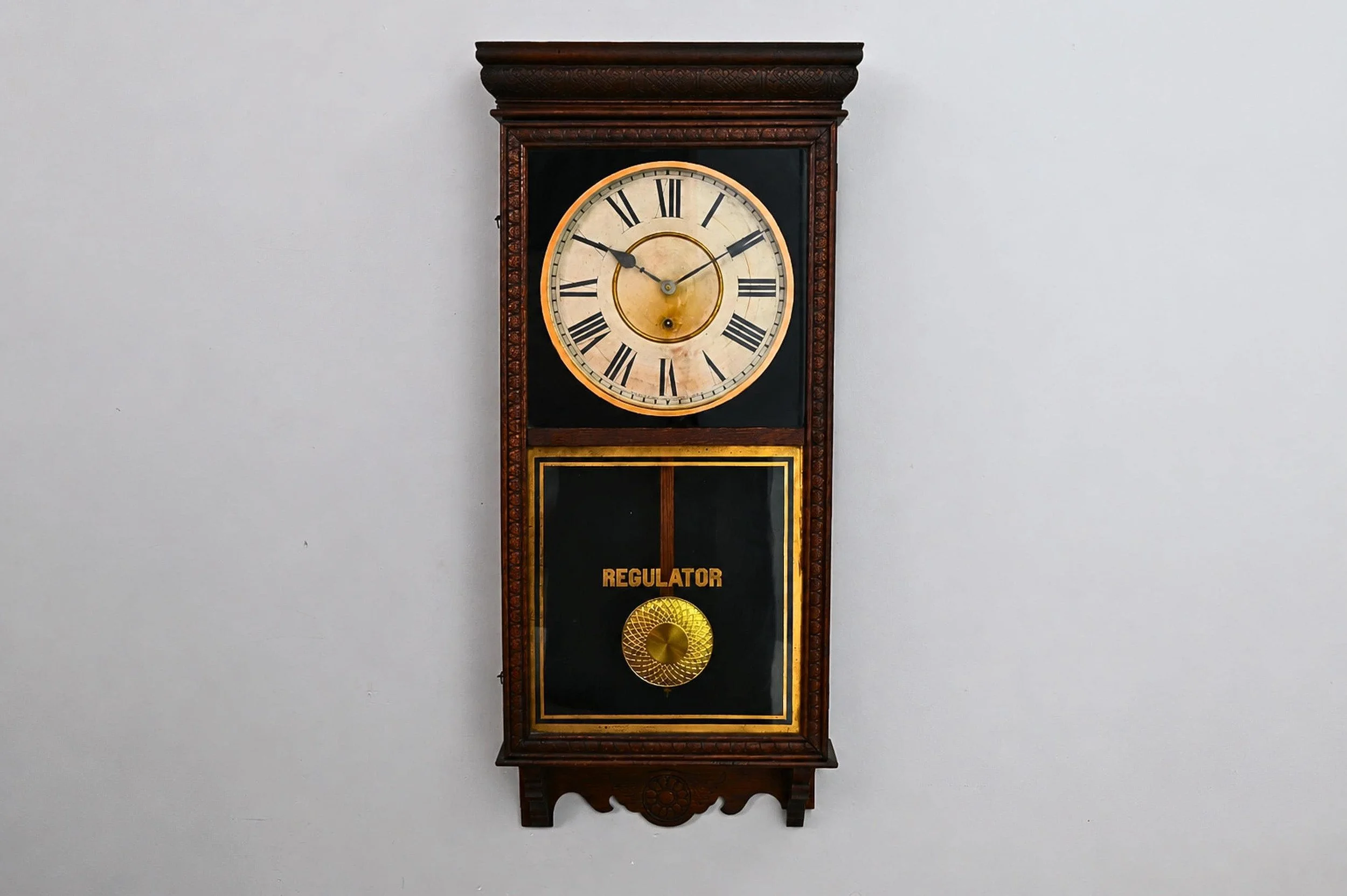 Image 1 of 15
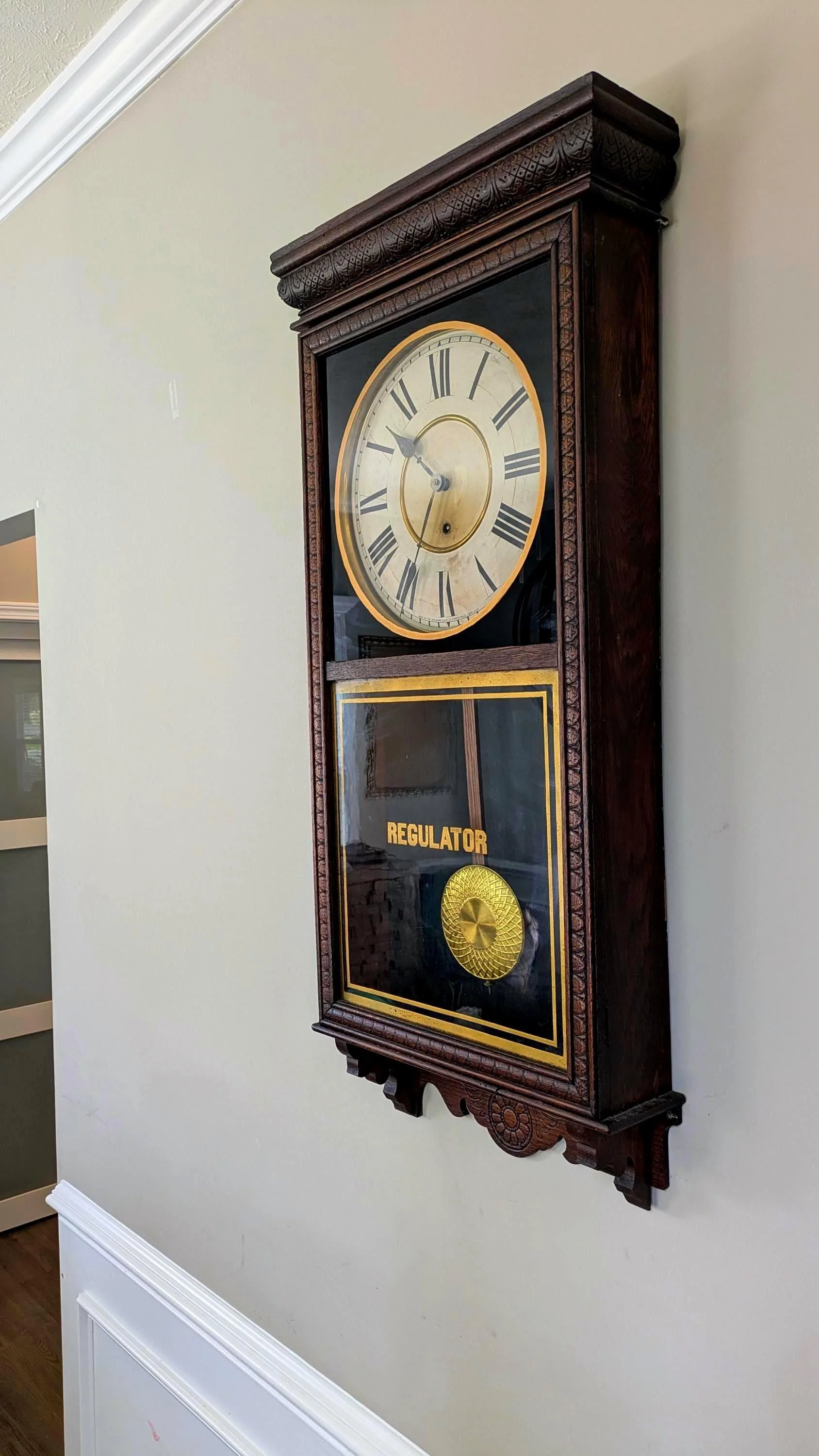 Image 2 of 15
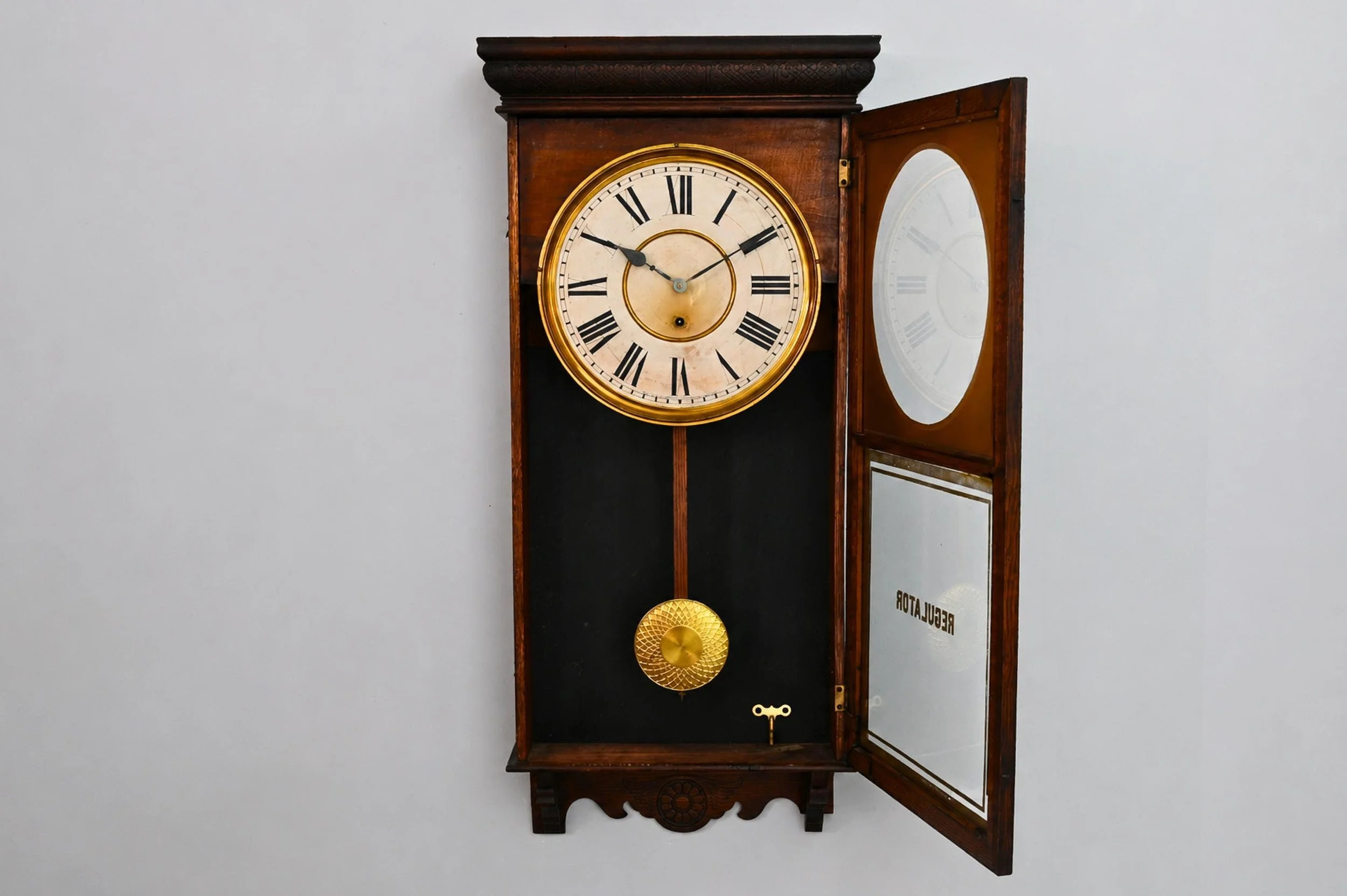 Image 3 of 15
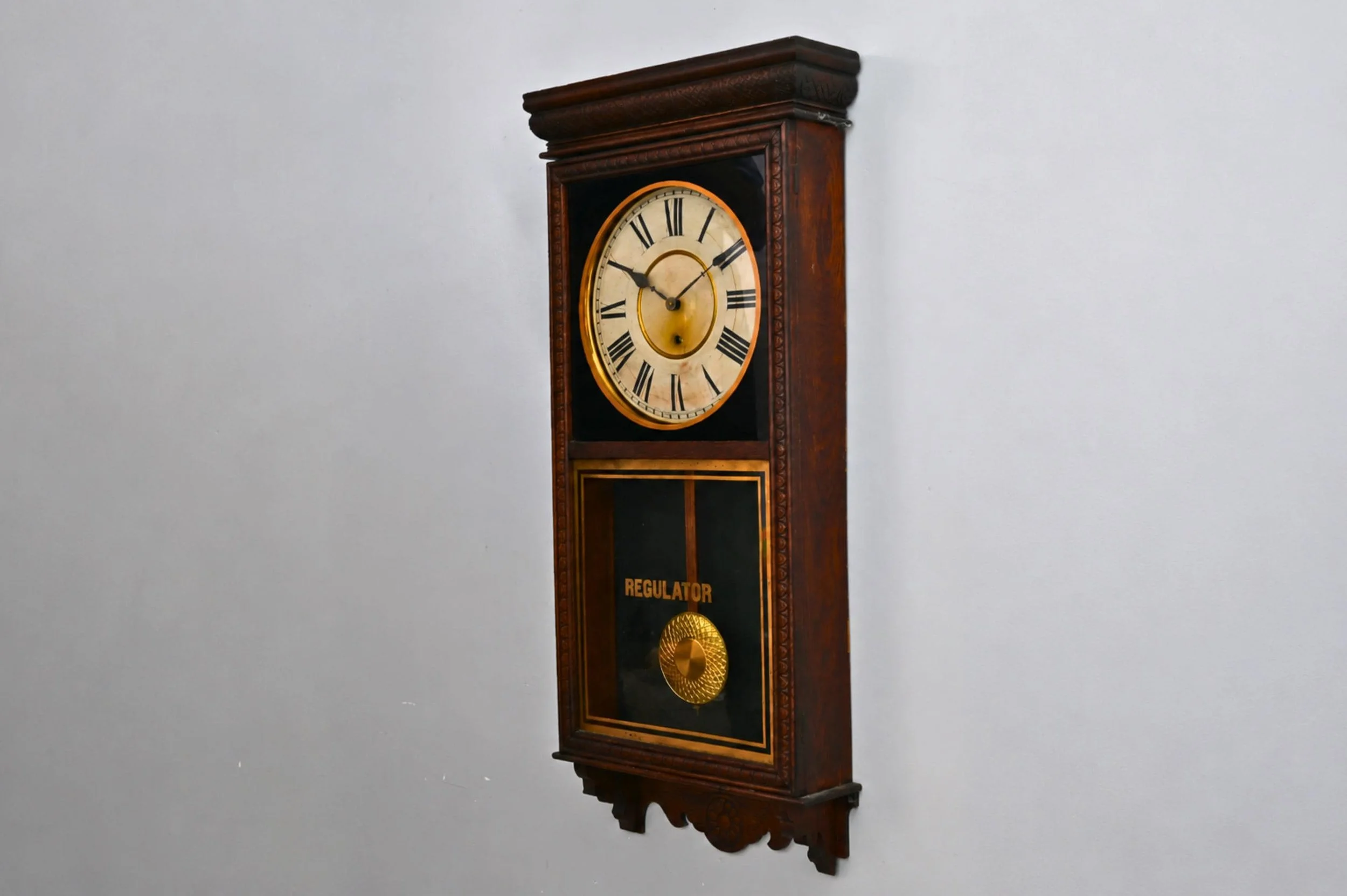 Image 4 of 15
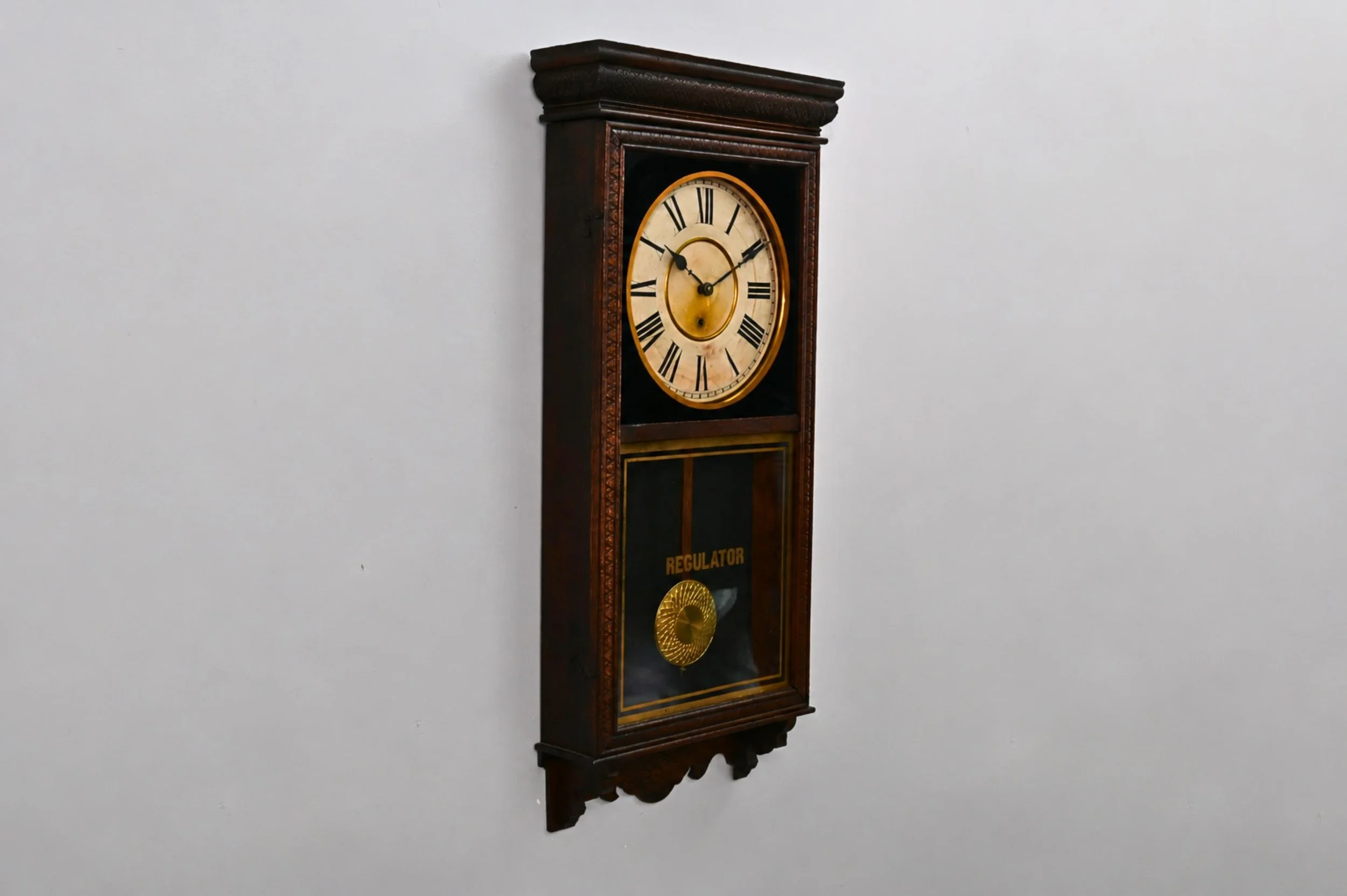 Image 5 of 15
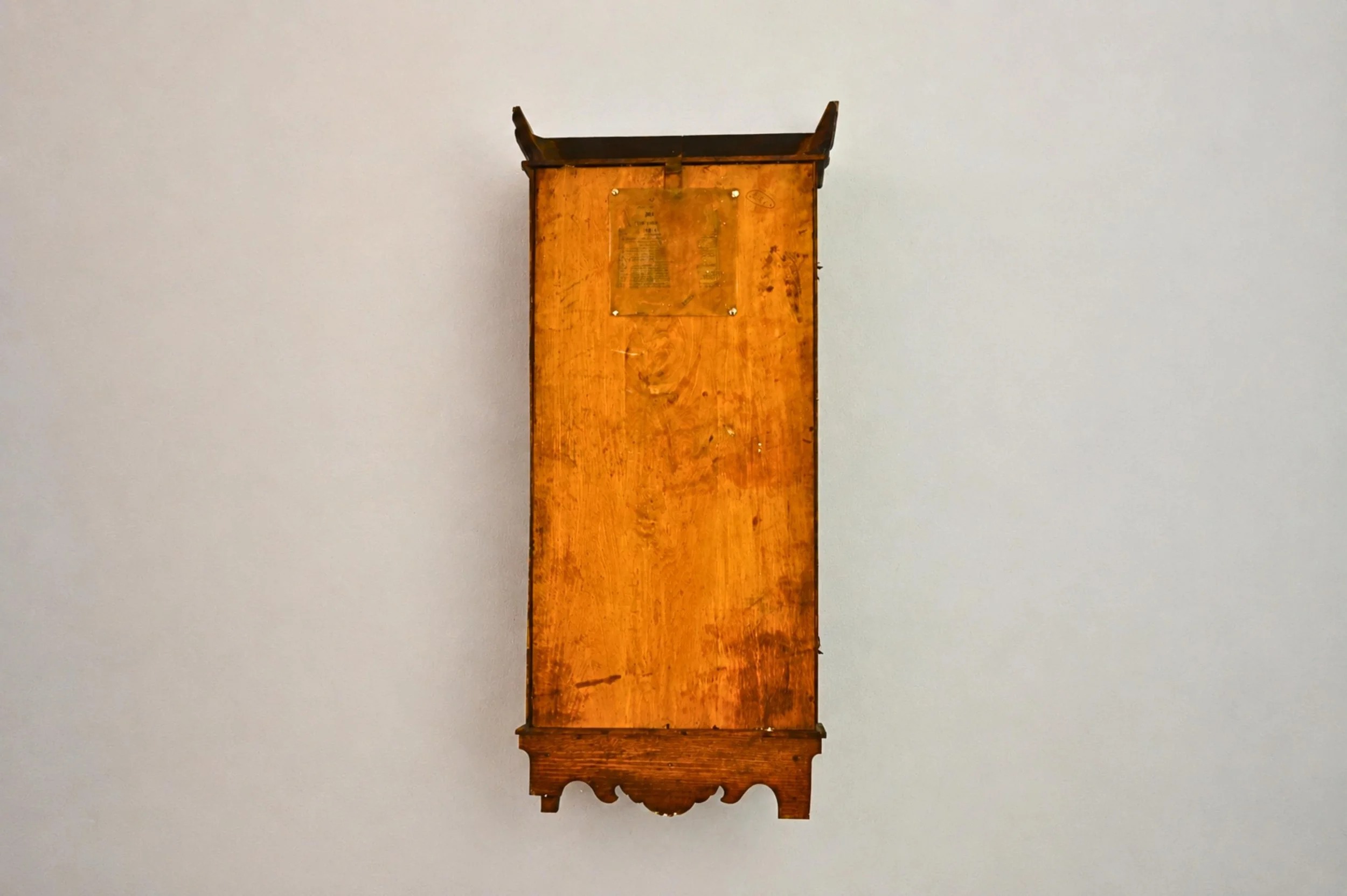 Image 6 of 15
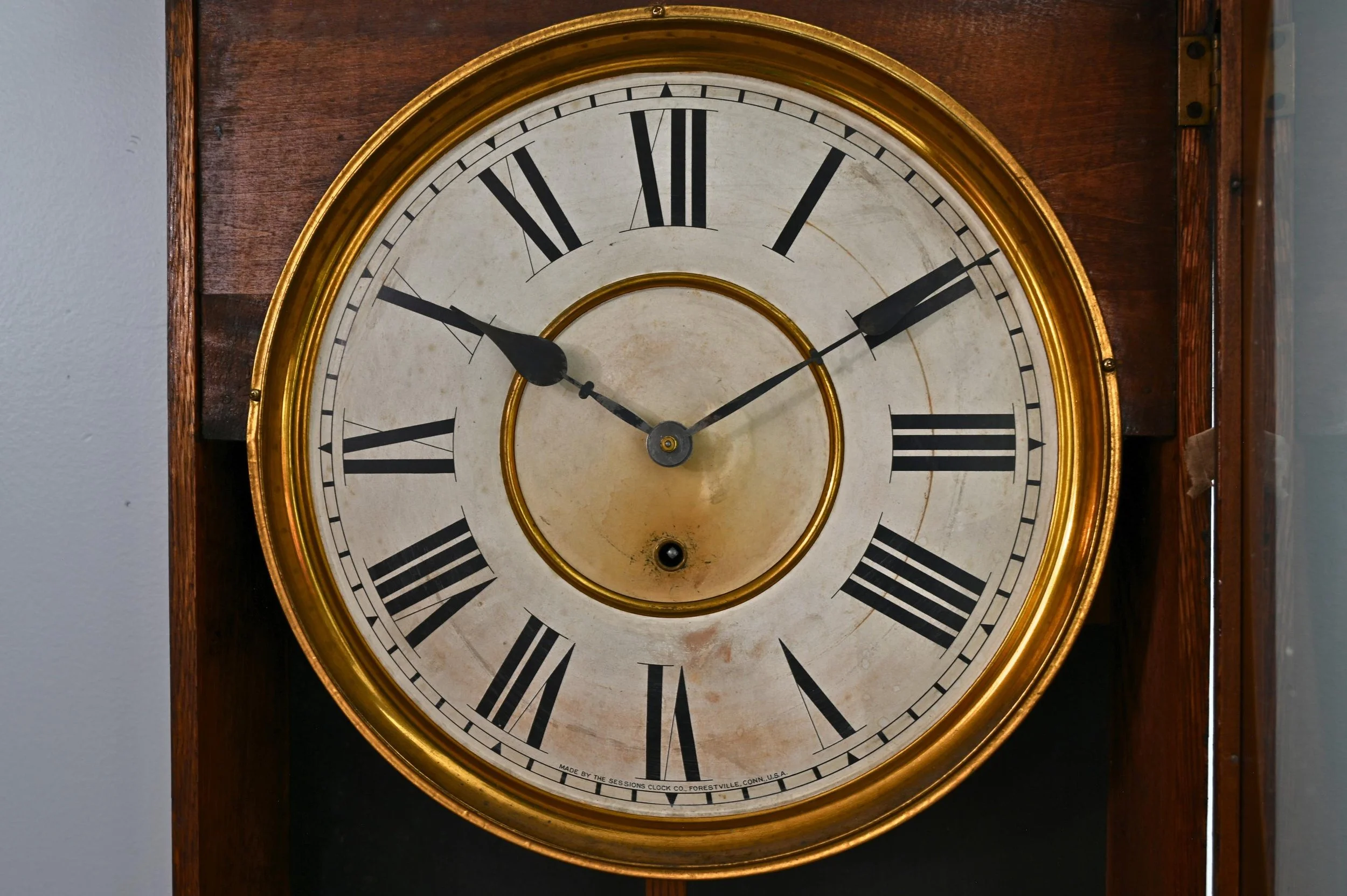 Image 7 of 15
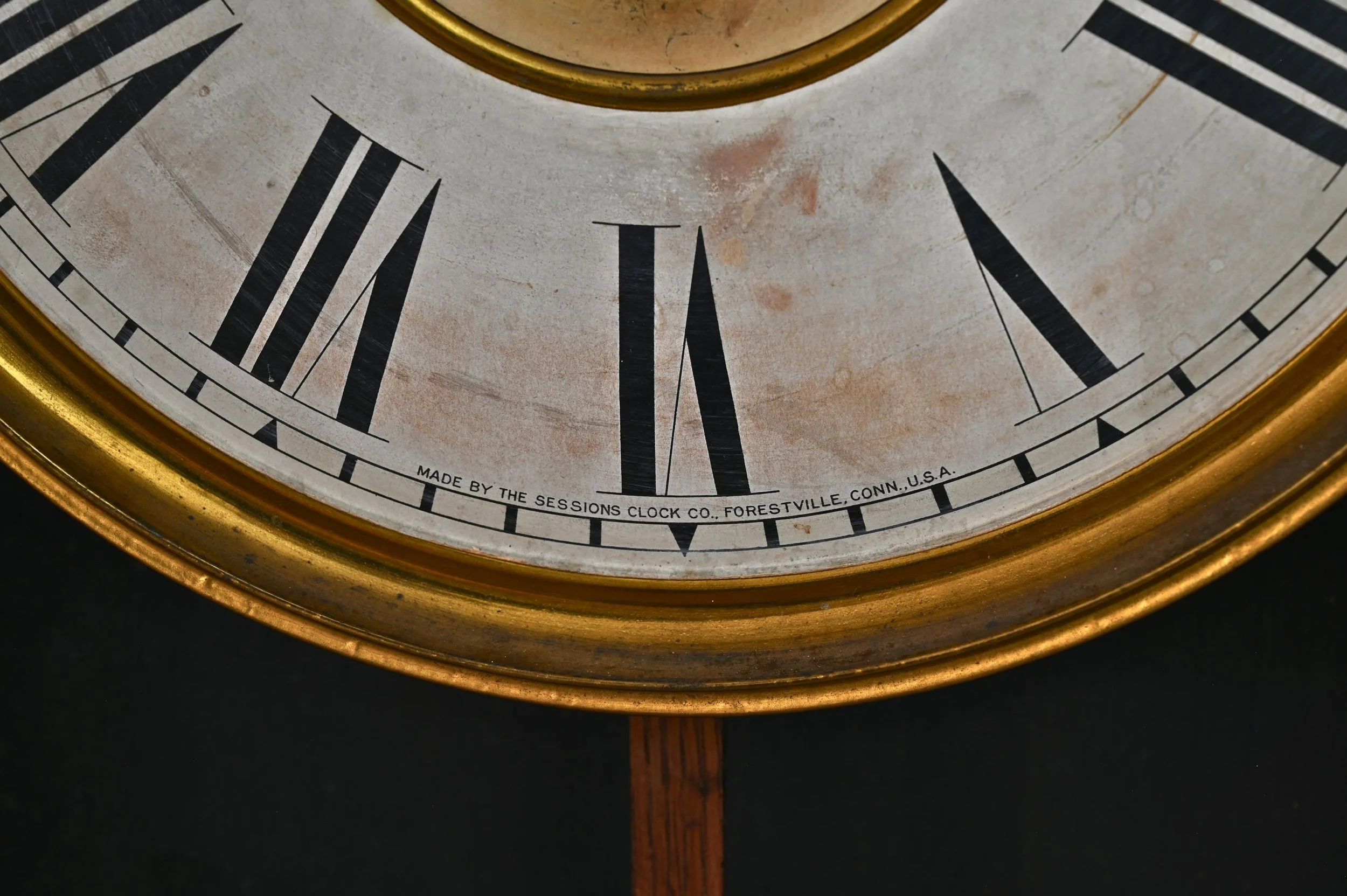 Image 8 of 15
 Image 9 of 15
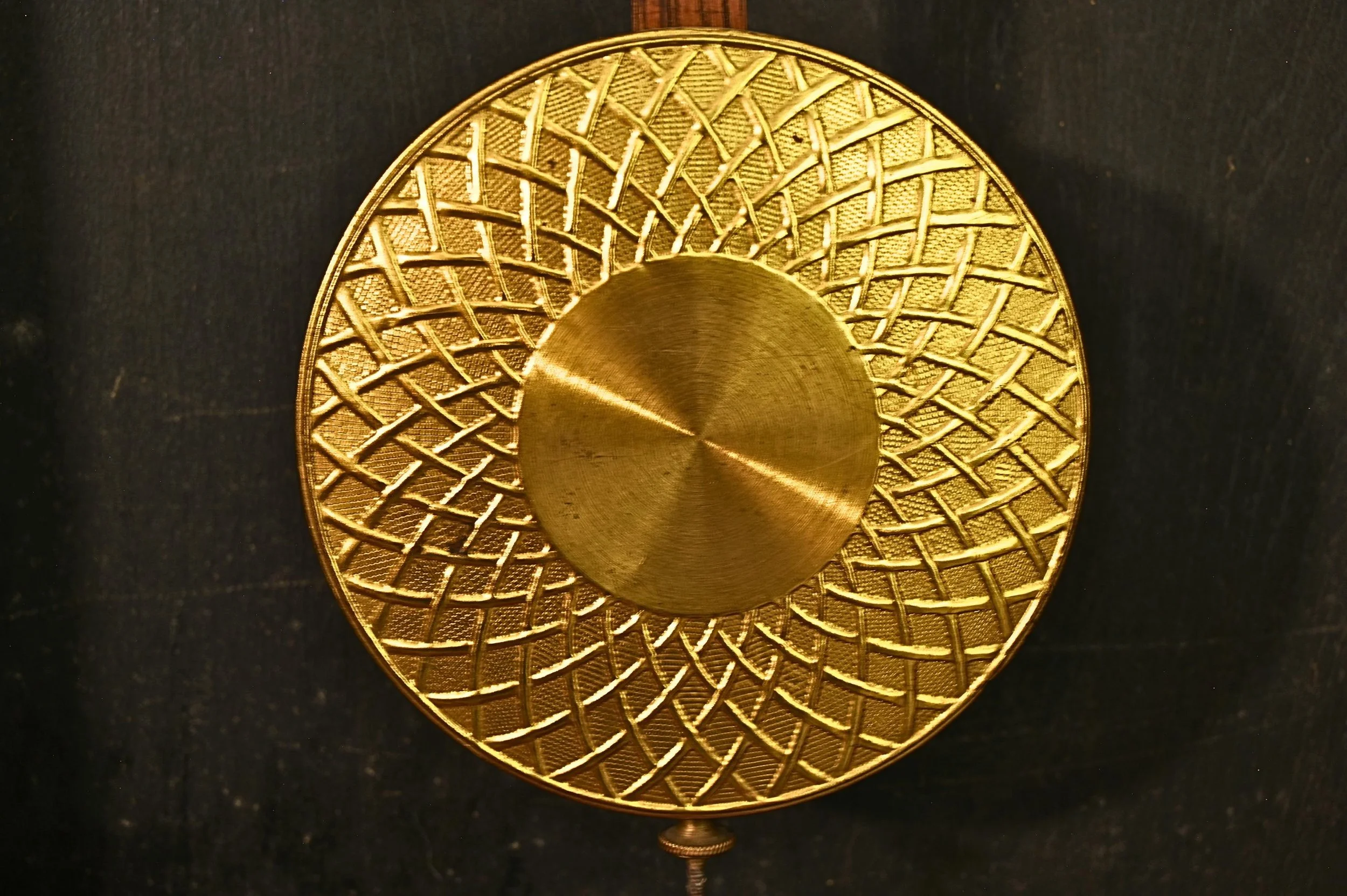 Image 10 of 15
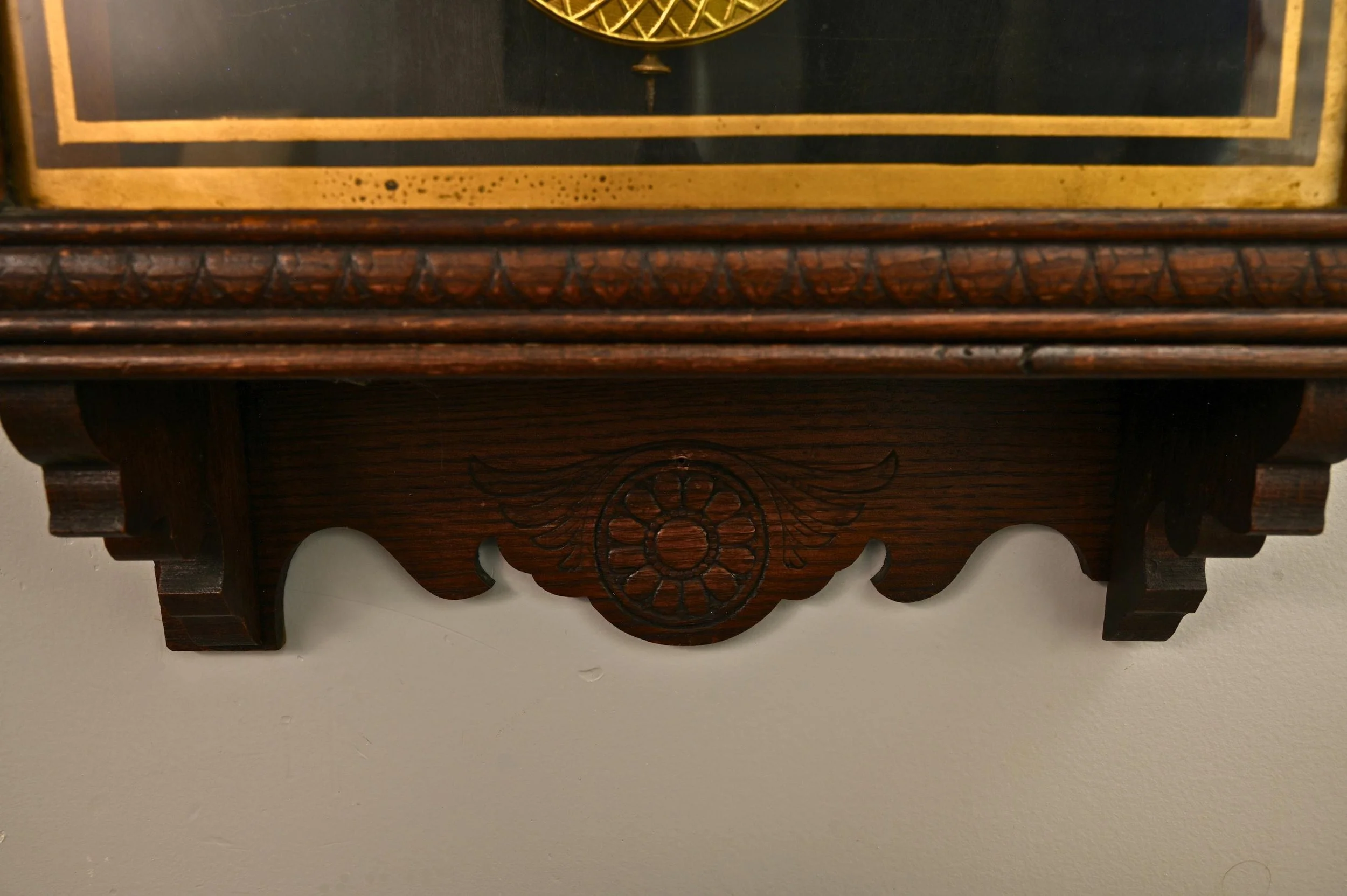 Image 11 of 15
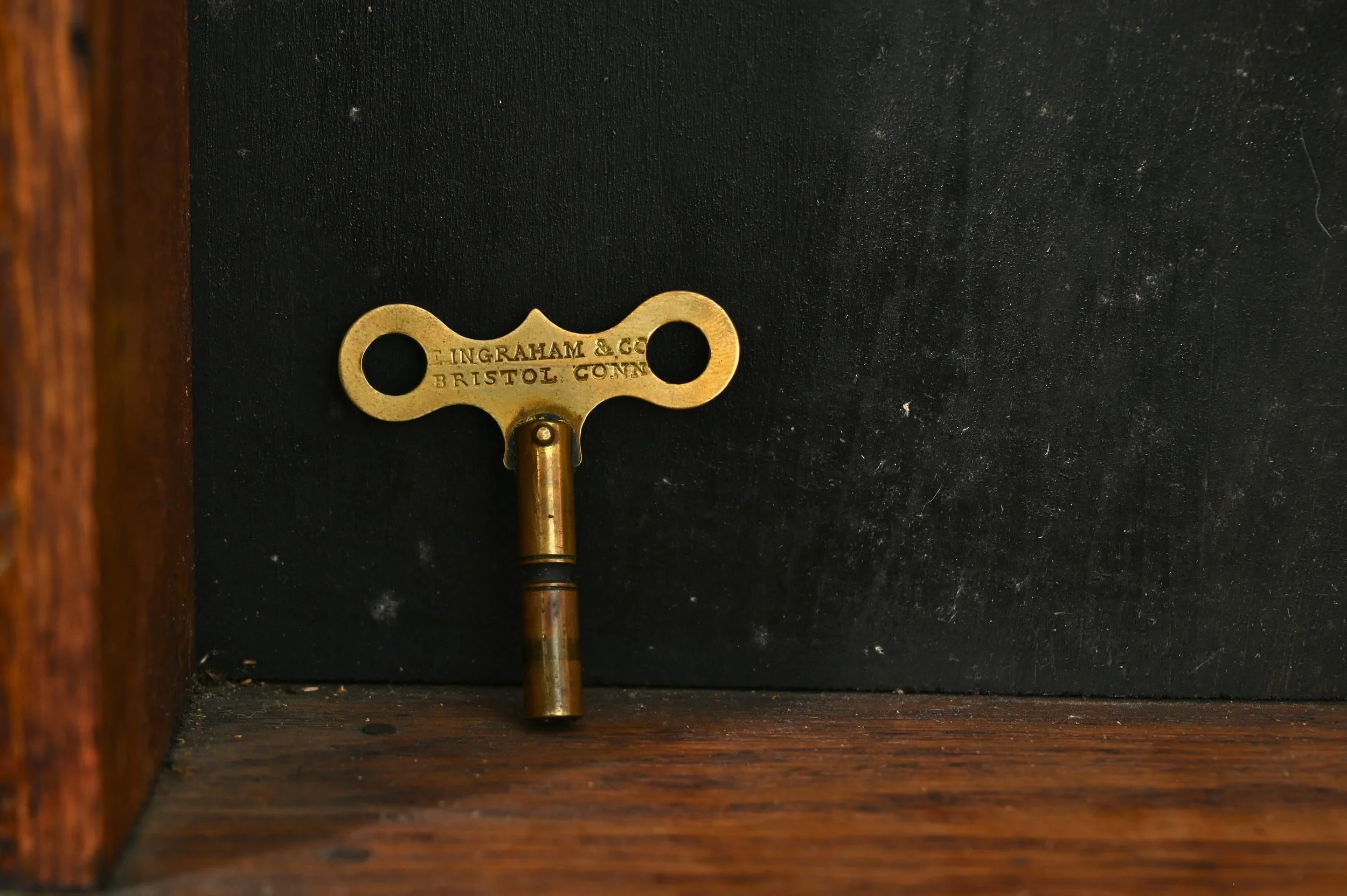 Image 12 of 15
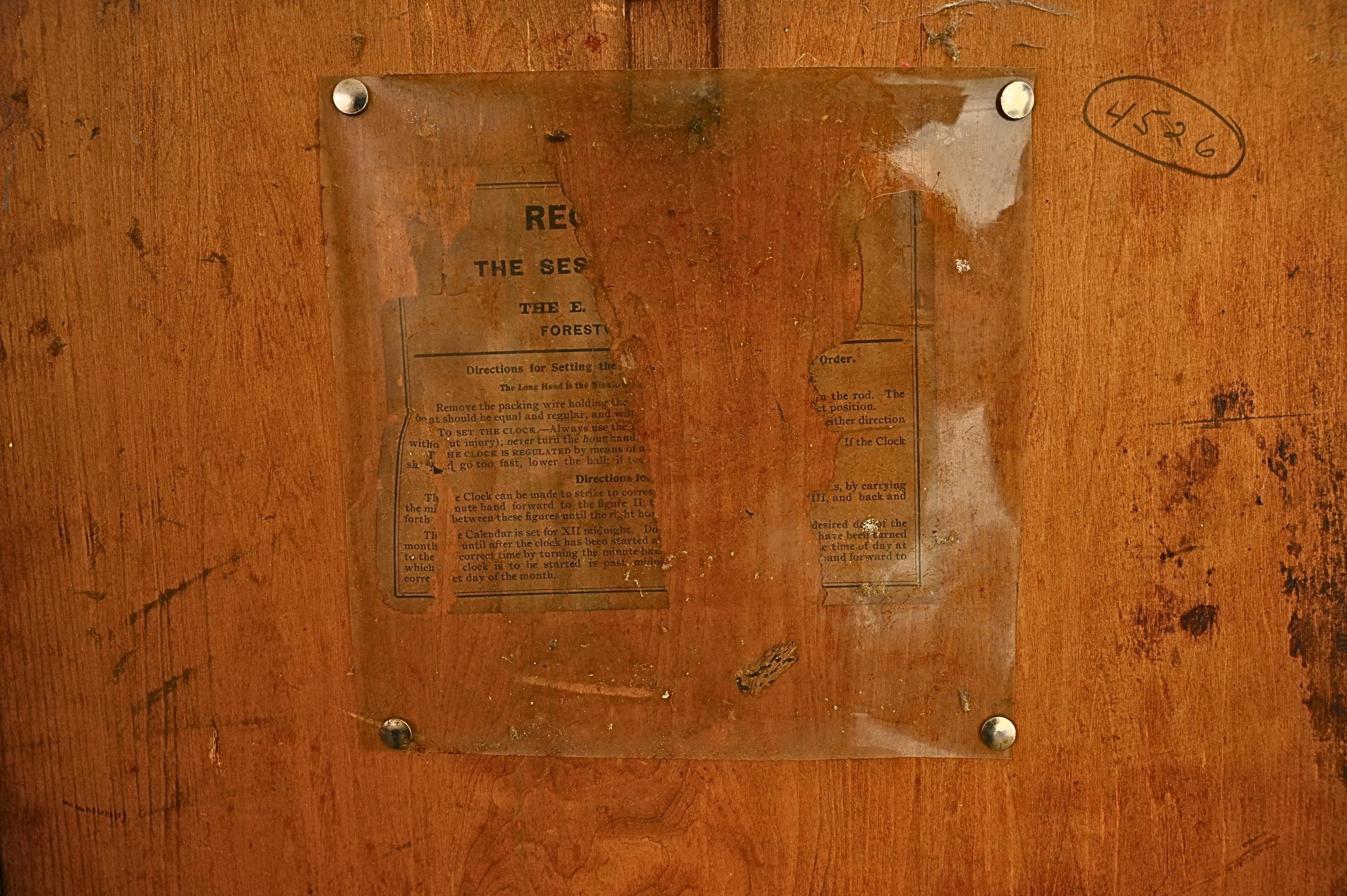 Image 13 of 15
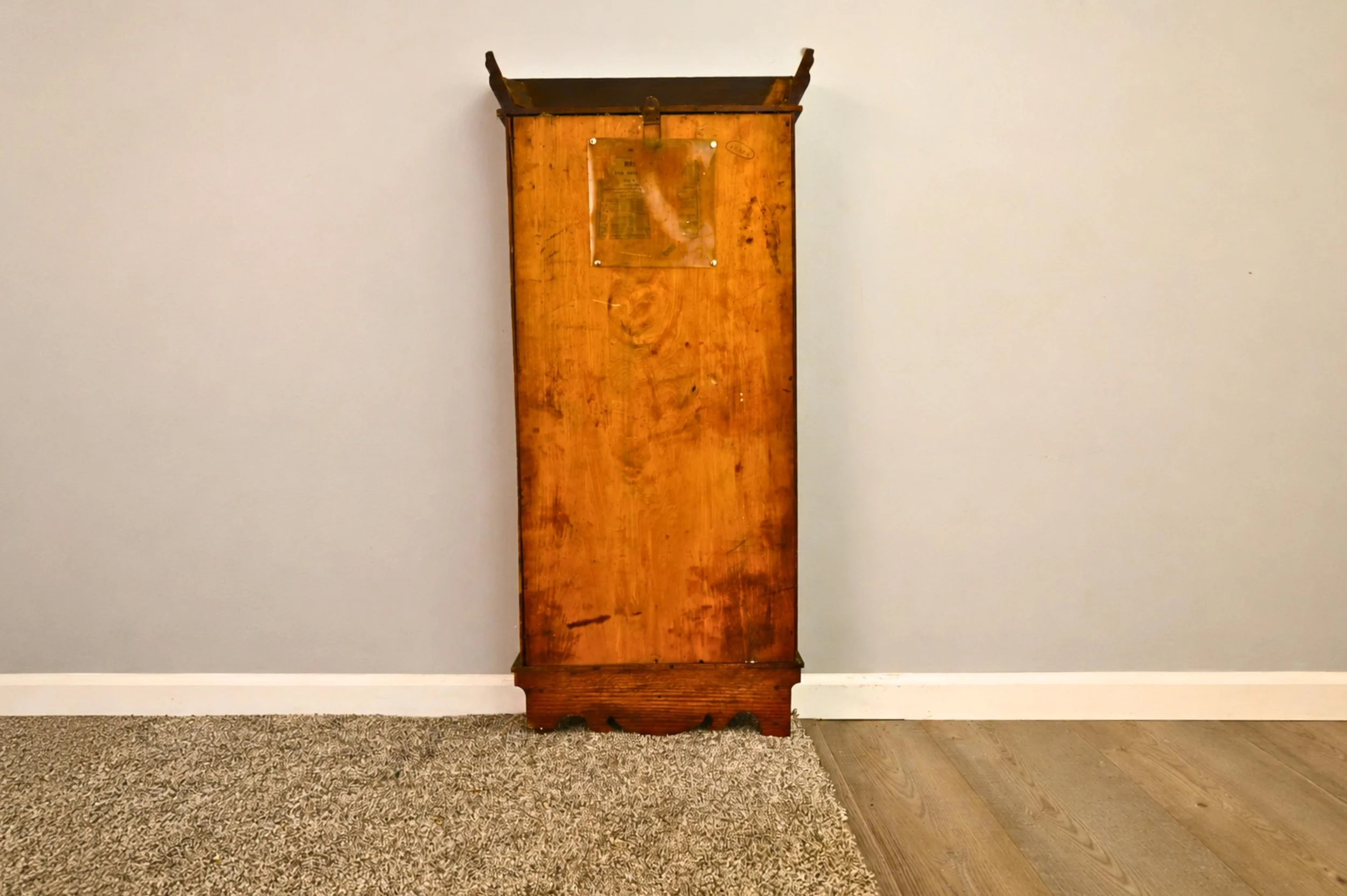 Image 14 of 15
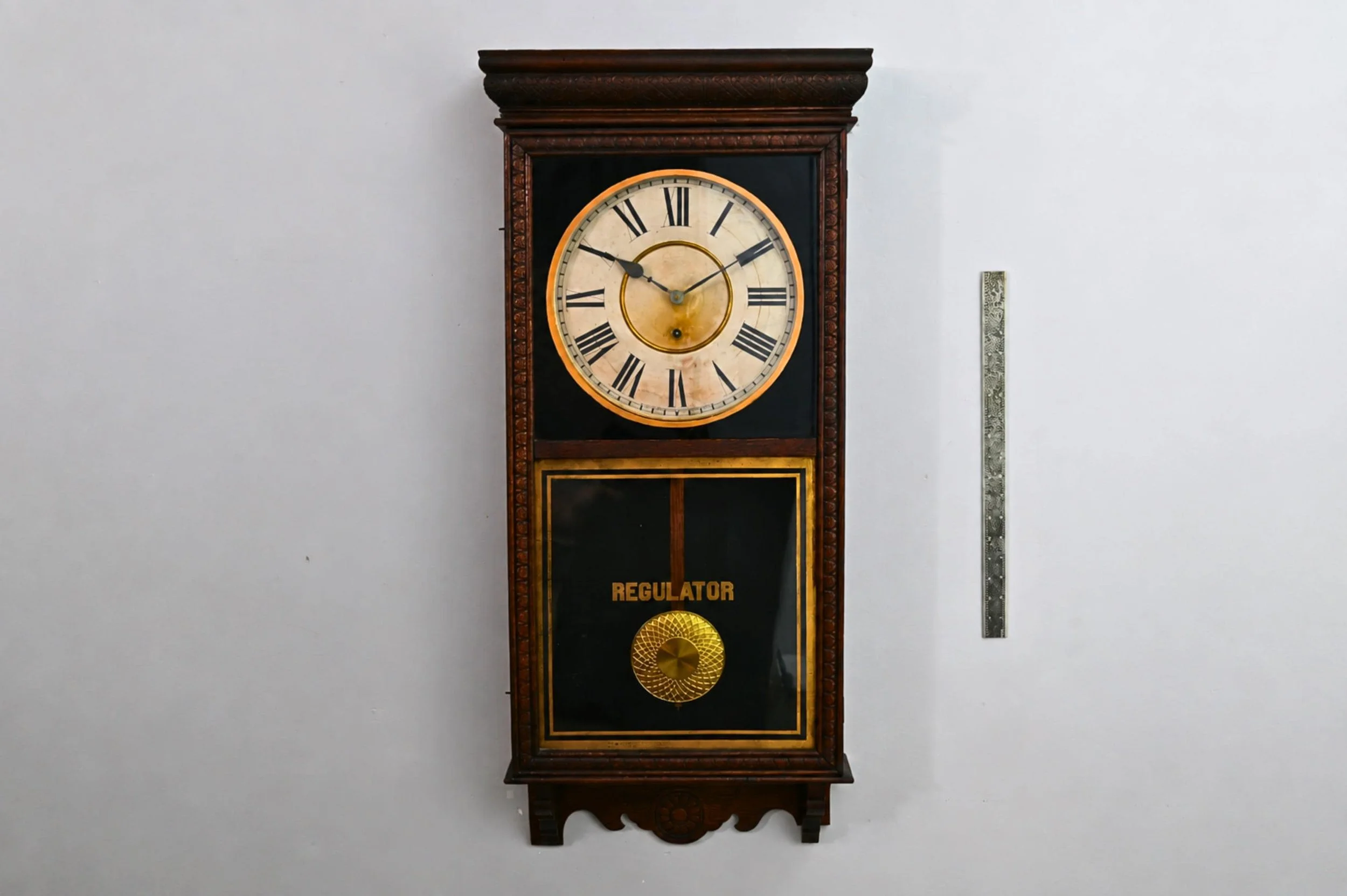 Image 15 of 15