1930s German Musical Alarm Clock - Cobalt Blue Art Deco
A wonderfully unusual 1930s German mechanical alarm clock dressed in vivid cobalt blue, with a warm gold-tone patterned dial, brass-tone bezel and feet, and a sharply pointed architectural case straight out of the Art Deco era.
But the best part is what happens when the alarm goes off.
Instead of waking you with the usual metallic bell or buzzer, this clock activates a built-in mechanical music box, playing a repeating melody through three geometric sound openings on the lower front. The openings are backed with woven grille material, functioning almost like a tiny speaker grille while doubling as one of the clock’s most distinctive decorative details.
The clock has been tested and is ticking, keeping time, and the musical alarm is working properly.
Want to hear the musical alarm? Etsy listing videos don’t support audio, but an audio demonstration is available upon request - just send us a message.
📚 Historical Context
Start with a sheet-metal case. Give it four little brass feet. Form the top into an architectural point, coat the whole thing in cobalt blue, drop in a gold-patterned dial, and then, because apparently an ordinary alarm wasn’t interesting enough, hide a mechanical music box inside.
That was the world of German clockmaking between the wars: mass production had become sophisticated enough that a household necessity could also be a piece of design.
German manufacturers were already major players in industrial clock production by this period. Junghans, founded in 1861 in Schramberg, had become the world’s largest watch factory by 1903, and alarm clocks were among its early specialties.
And alarm clocks were no longer condemned to being plain little round boxes. Period reporting from 1930 described them appearing in blue, red, green, silver, gold, and an enormous variety of shapes: evidence that manufacturers were treating the bedside clock as décor as much as machinery.
This clock fits neatly into that moment. Its pointed silhouette and geometric detailing carry the Art Deco vocabulary, while the musical alarm adds a bit of mechanical theater. Surviving German musical alarms from makers including Kienzle and Junghans show that music-box waking mechanisms were very much part of the era’s clockmaking repertoire.
No manufacturer’s name is visible externally on this example, so rather than invent a pedigree, we’ll let the clock speak (or, in this case, play) for itself. The underside is stamped GERMANY.
✨ Condition Notes
- In excellent overall vintage condition, especially considering its approximate age.
- Original cobalt-blue painted metal case remains remarkably bright and glossy.
- Minor scattered paint loss and small chips are present, most noticeably along the pointed upper edge and several case seams.
- Gold-tone patterned dial remains attractive and highly legible.
- Glass appears clear and intact.
- Brass-tone bezel and four feet show natural patina and age-related surface wear.
- Three triangular front sound openings retain their woven grille material.
- Rear mechanical controls and winding hardware are present.
- Rear controls are marked CLOCK and MUSIC.
- Underside is stamped GERMANY.
- Mechanical clock movement has been tested and is ticking.
- Clock has been tested and is keeping time.
- Musical alarm has been tested and works properly, activating a repeating mechanical melody rather than a conventional bell alarm.
- Melody is currently unidentified.
Please review all photographs closely, as they are part of the condition description.
📏 Measurements (approximate)
Height: 5.1 in
Width: 2.75 in
Depth: 1.75 in
📦 Packaging
Clock will be professionally padded and boxed with care.
A wonderfully unusual 1930s German mechanical alarm clock dressed in vivid cobalt blue, with a warm gold-tone patterned dial, brass-tone bezel and feet, and a sharply pointed architectural case straight out of the Art Deco era.
But the best part is what happens when the alarm goes off.
Instead of waking you with the usual metallic bell or buzzer, this clock activates a built-in mechanical music box, playing a repeating melody through three geometric sound openings on the lower front. The openings are backed with woven grille material, functioning almost like a tiny speaker grille while doubling as one of the clock’s most distinctive decorative details.
The clock has been tested and is ticking, keeping time, and the musical alarm is working properly.
Want to hear the musical alarm? Etsy listing videos don’t support audio, but an audio demonstration is available upon request - just send us a message.
📚 Historical Context
Start with a sheet-metal case. Give it four little brass feet. Form the top into an architectural point, coat the whole thing in cobalt blue, drop in a gold-patterned dial, and then, because apparently an ordinary alarm wasn’t interesting enough, hide a mechanical music box inside.
That was the world of German clockmaking between the wars: mass production had become sophisticated enough that a household necessity could also be a piece of design.
German manufacturers were already major players in industrial clock production by this period. Junghans, founded in 1861 in Schramberg, had become the world’s largest watch factory by 1903, and alarm clocks were among its early specialties.
And alarm clocks were no longer condemned to being plain little round boxes. Period reporting from 1930 described them appearing in blue, red, green, silver, gold, and an enormous variety of shapes: evidence that manufacturers were treating the bedside clock as décor as much as machinery.
This clock fits neatly into that moment. Its pointed silhouette and geometric detailing carry the Art Deco vocabulary, while the musical alarm adds a bit of mechanical theater. Surviving German musical alarms from makers including Kienzle and Junghans show that music-box waking mechanisms were very much part of the era’s clockmaking repertoire.
No manufacturer’s name is visible externally on this example, so rather than invent a pedigree, we’ll let the clock speak (or, in this case, play) for itself. The underside is stamped GERMANY.
✨ Condition Notes
- In excellent overall vintage condition, especially considering its approximate age.
- Original cobalt-blue painted metal case remains remarkably bright and glossy.
- Minor scattered paint loss and small chips are present, most noticeably along the pointed upper edge and several case seams.
- Gold-tone patterned dial remains attractive and highly legible.
- Glass appears clear and intact.
- Brass-tone bezel and four feet show natural patina and age-related surface wear.
- Three triangular front sound openings retain their woven grille material.
- Rear mechanical controls and winding hardware are present.
- Rear controls are marked CLOCK and MUSIC.
- Underside is stamped GERMANY.
- Mechanical clock movement has been tested and is ticking.
- Clock has been tested and is keeping time.
- Musical alarm has been tested and works properly, activating a repeating mechanical melody rather than a conventional bell alarm.
- Melody is currently unidentified.
Please review all photographs closely, as they are part of the condition description.
📏 Measurements (approximate)
Height: 5.1 in
Width: 2.75 in
Depth: 1.75 in
📦 Packaging
Clock will be professionally padded and boxed with care.
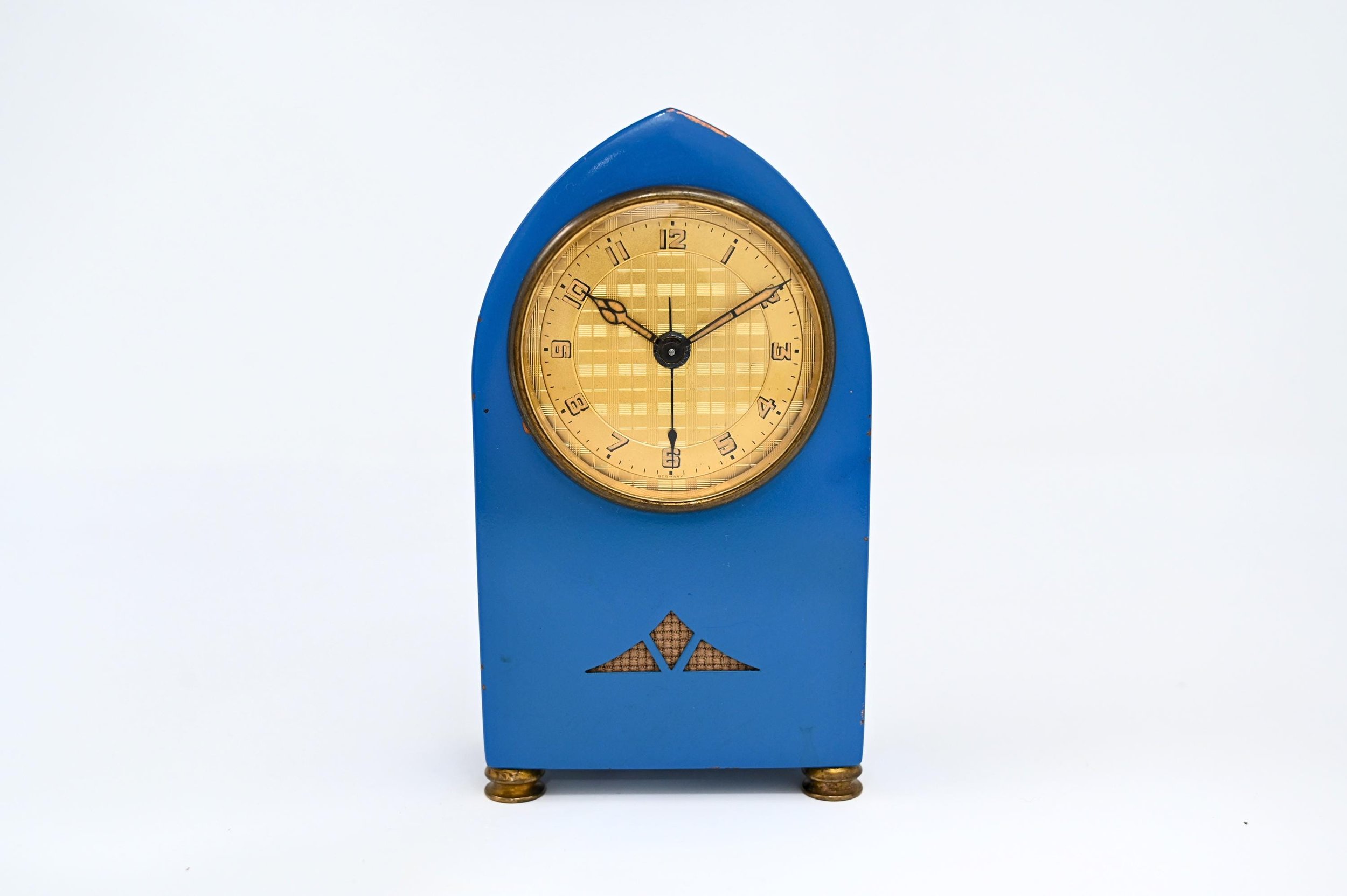 Image 1 of 14
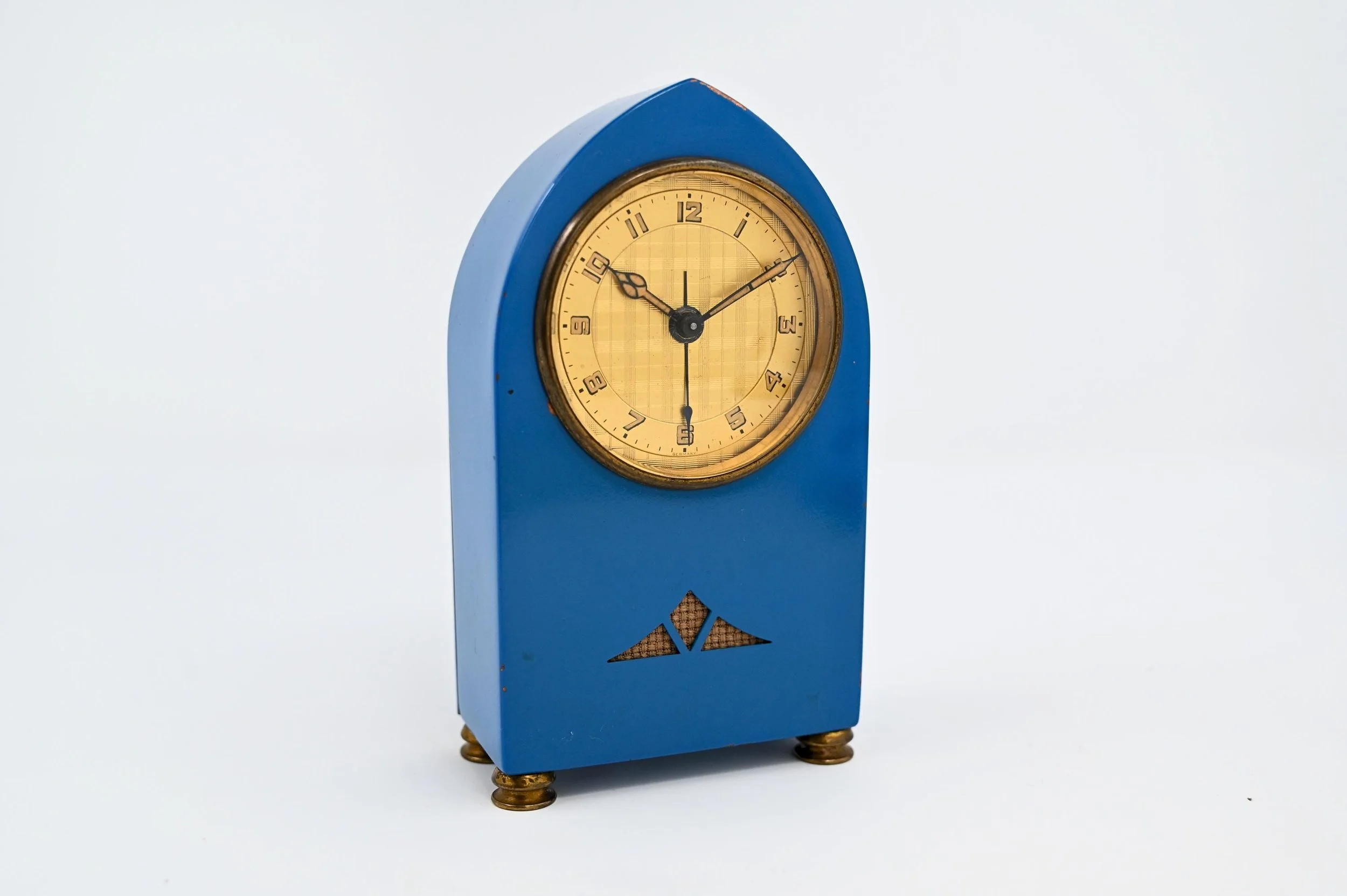 Image 2 of 14
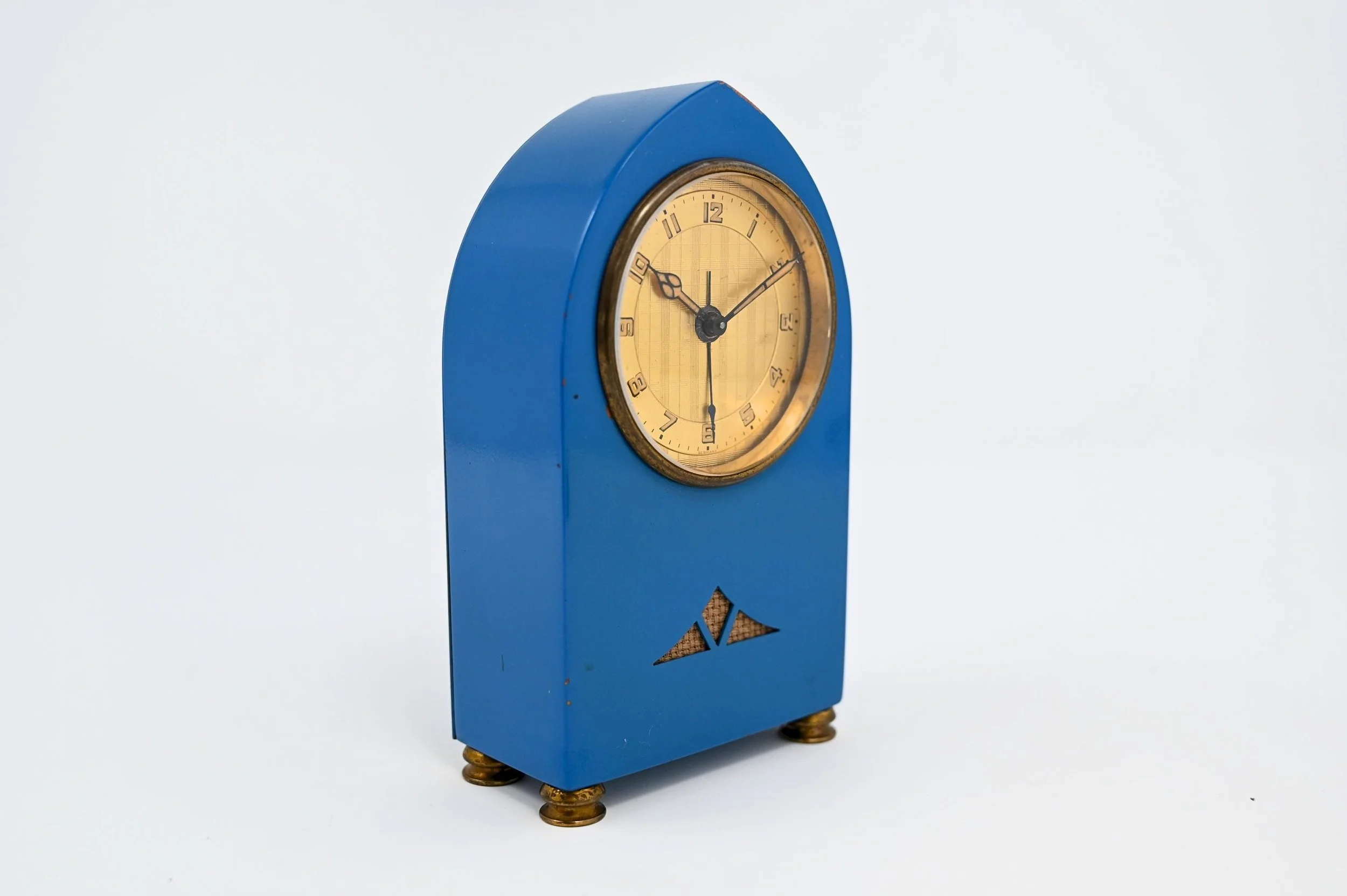 Image 3 of 14
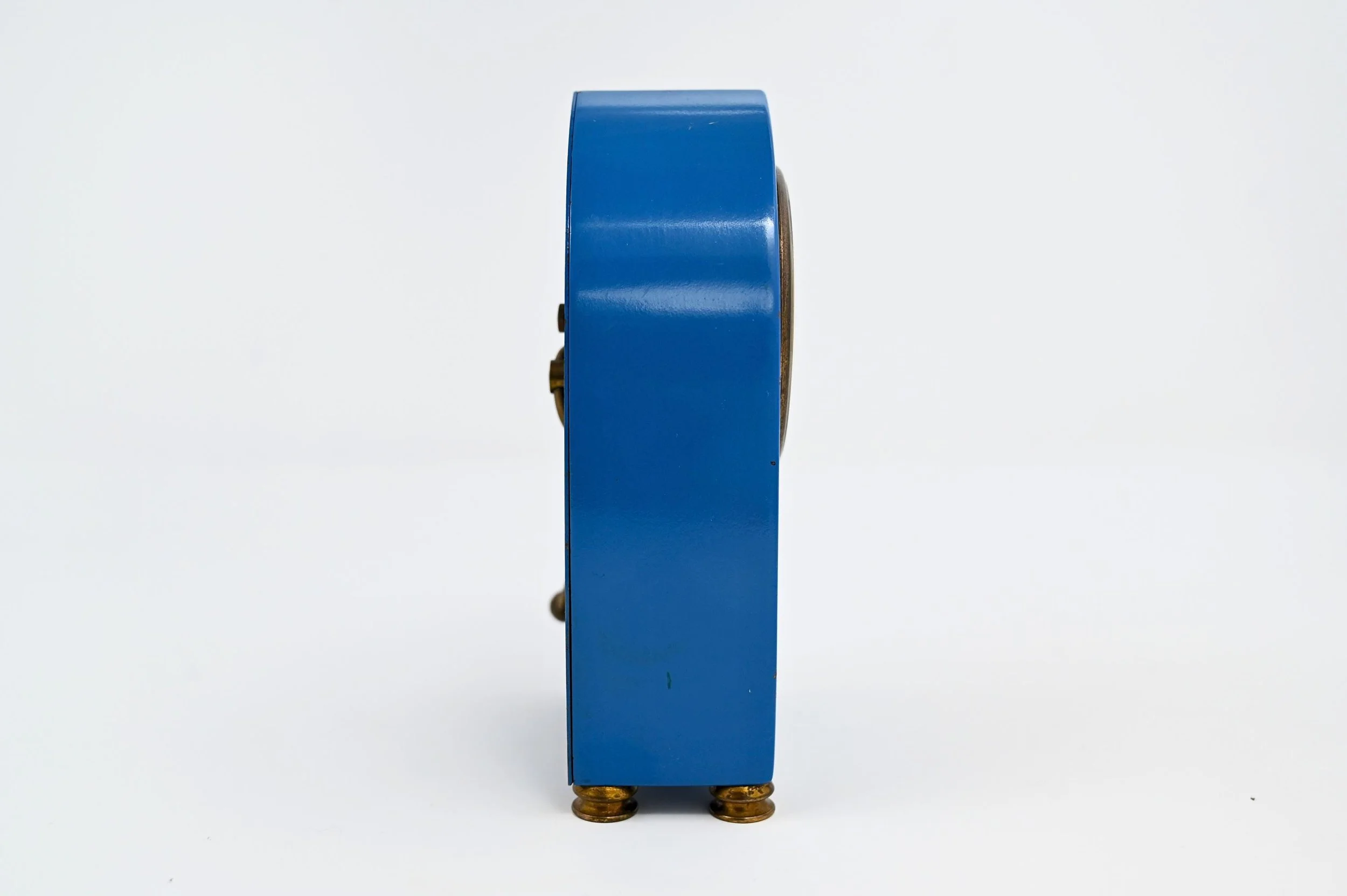 Image 4 of 14
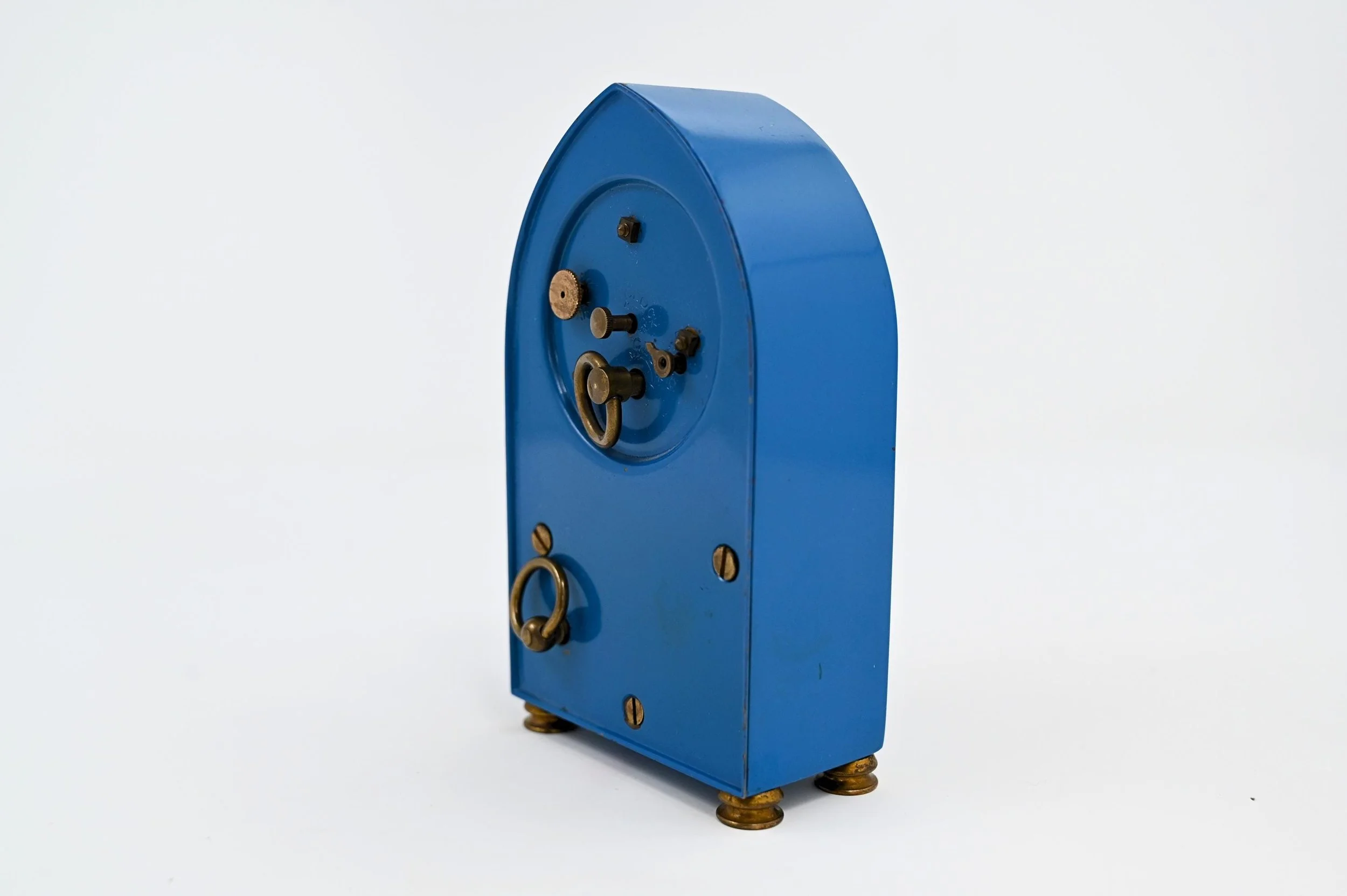 Image 5 of 14
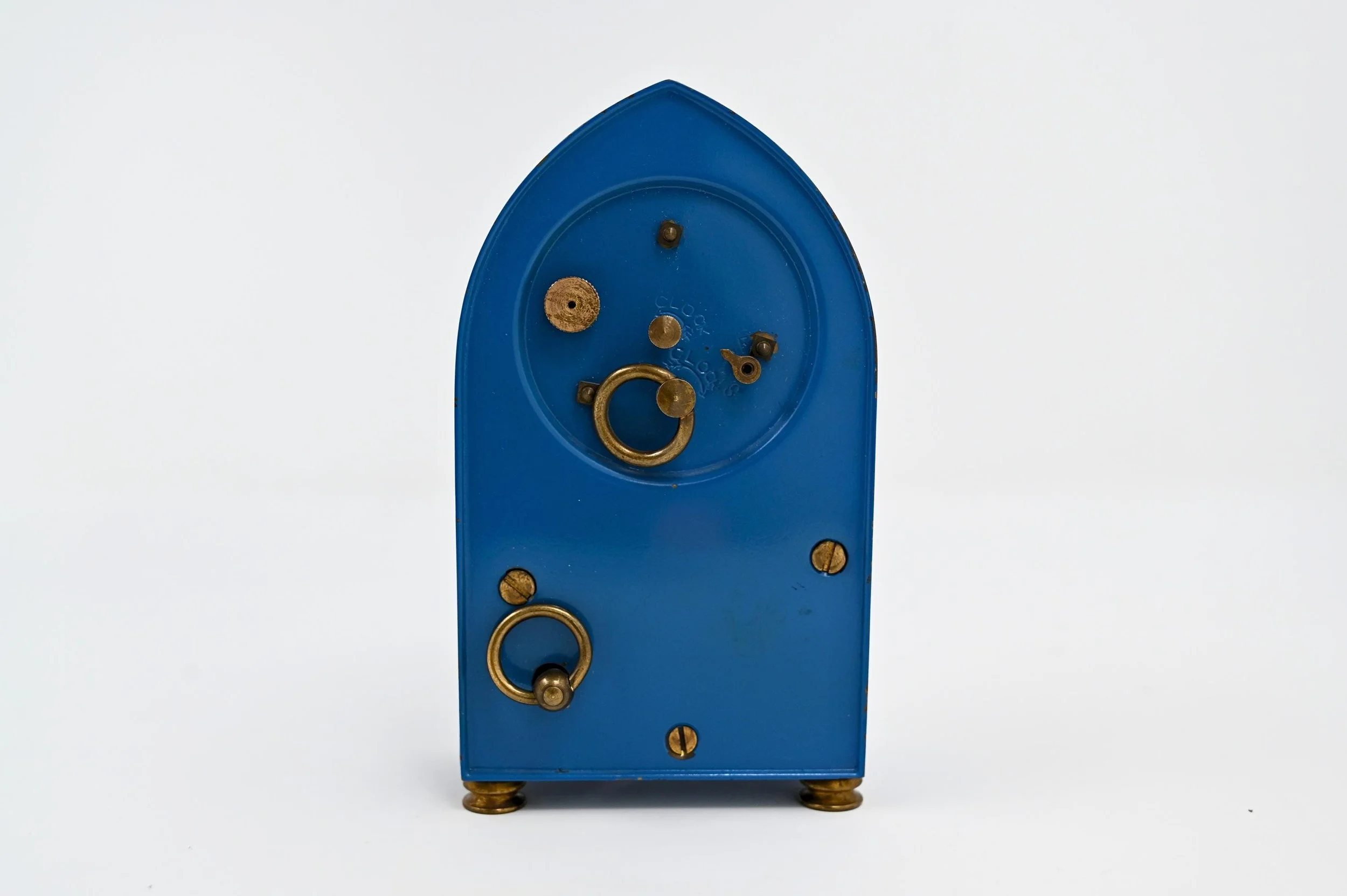 Image 6 of 14
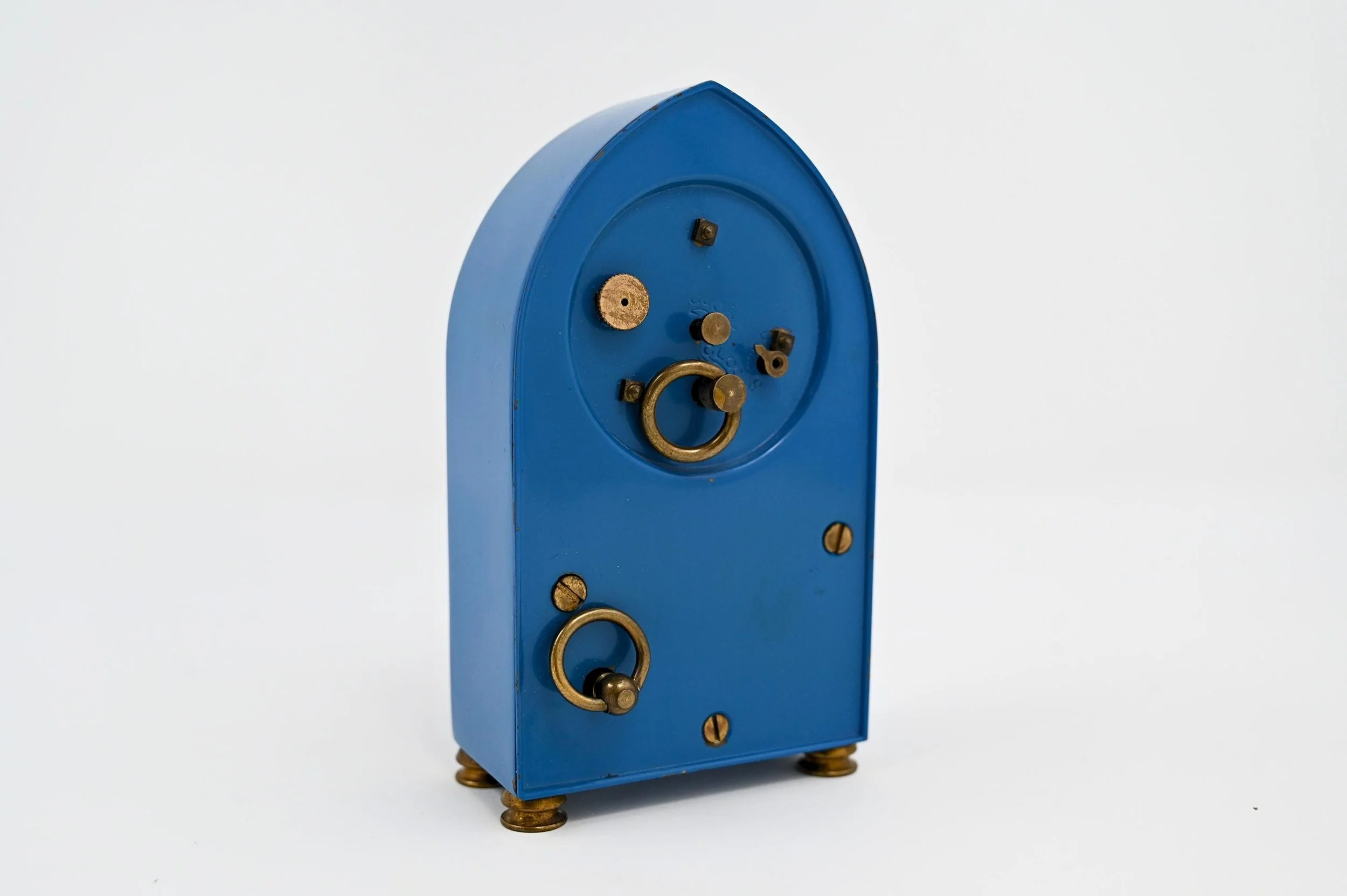 Image 7 of 14
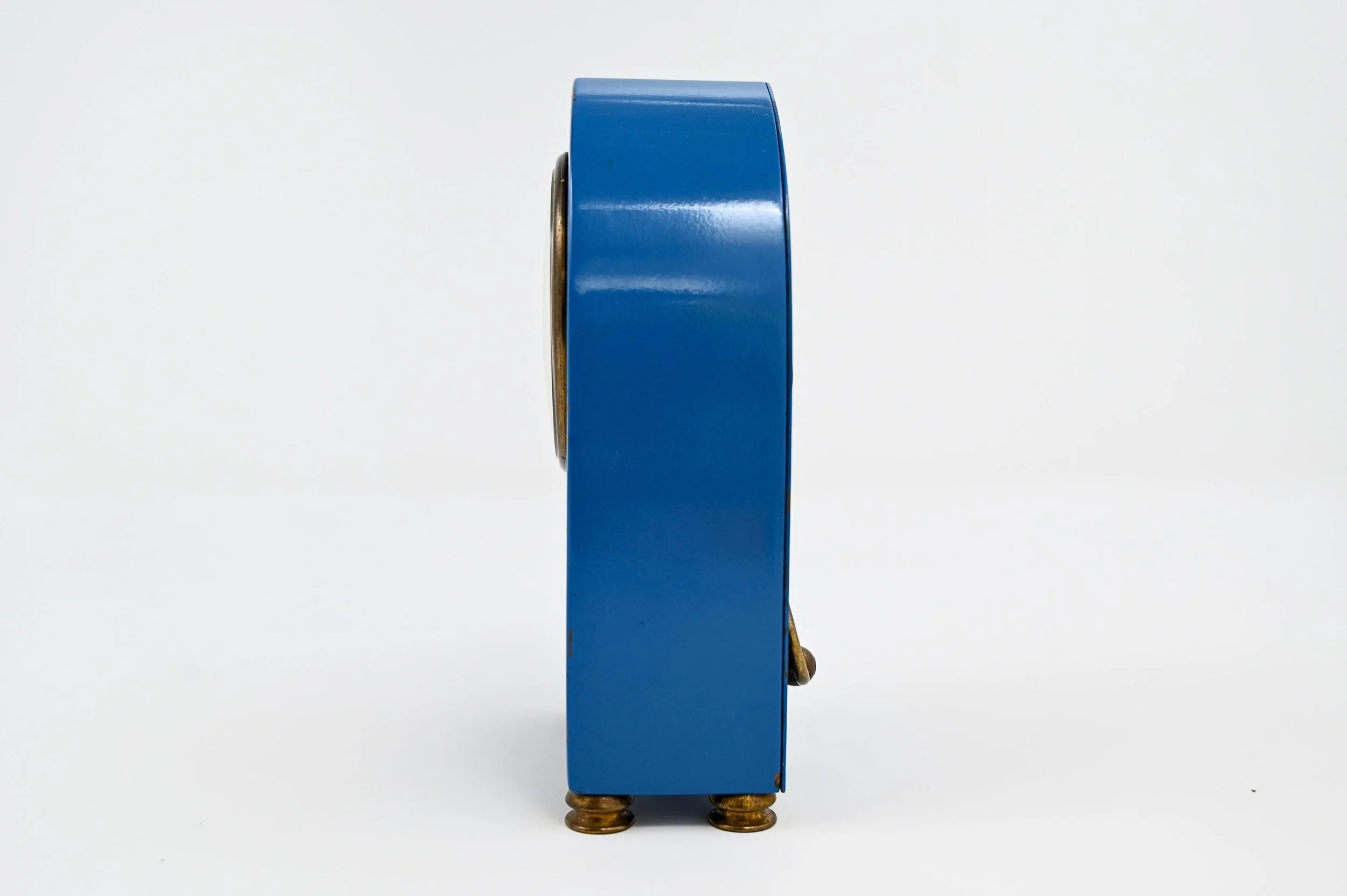 Image 8 of 14
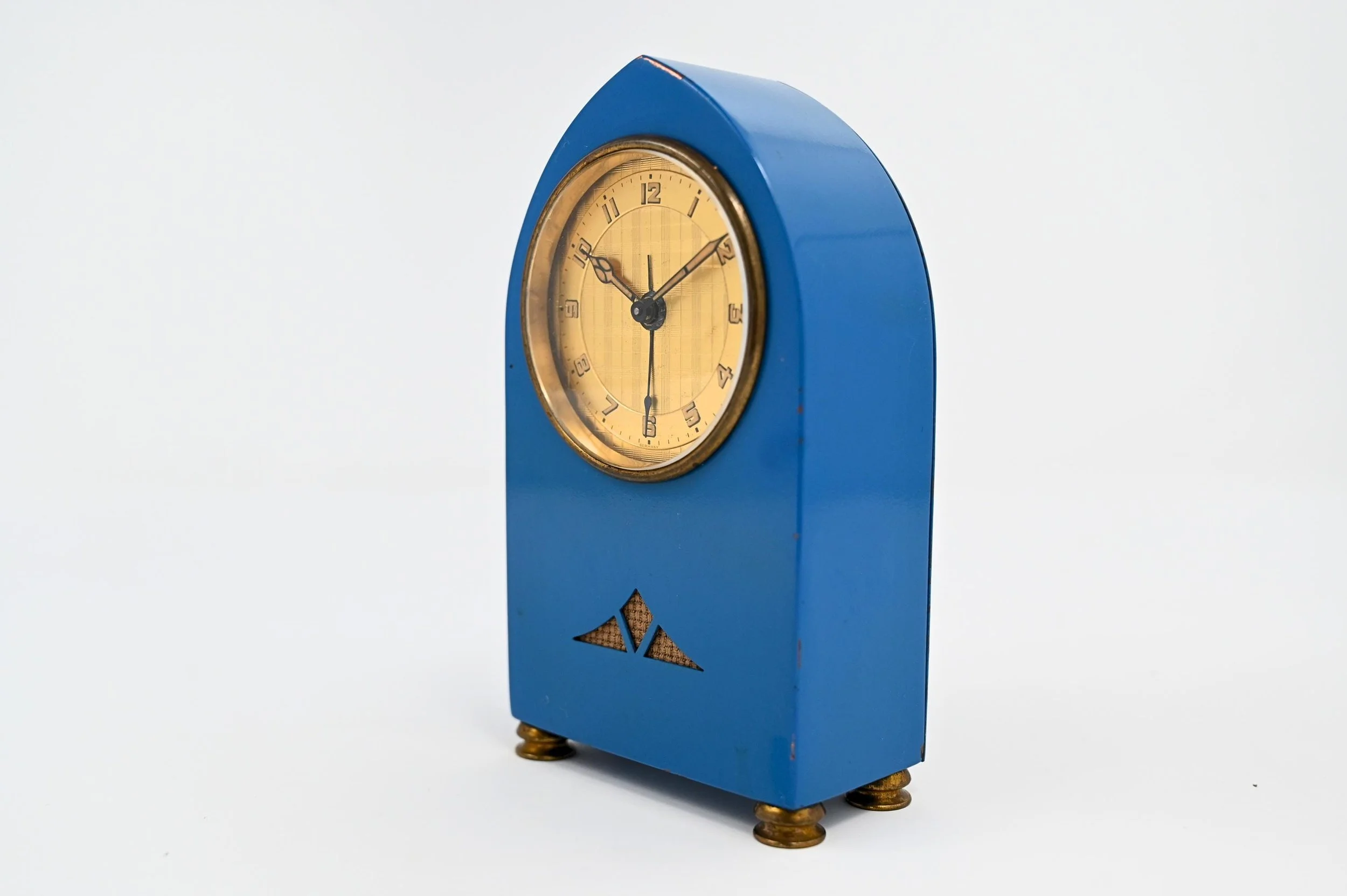 Image 9 of 14
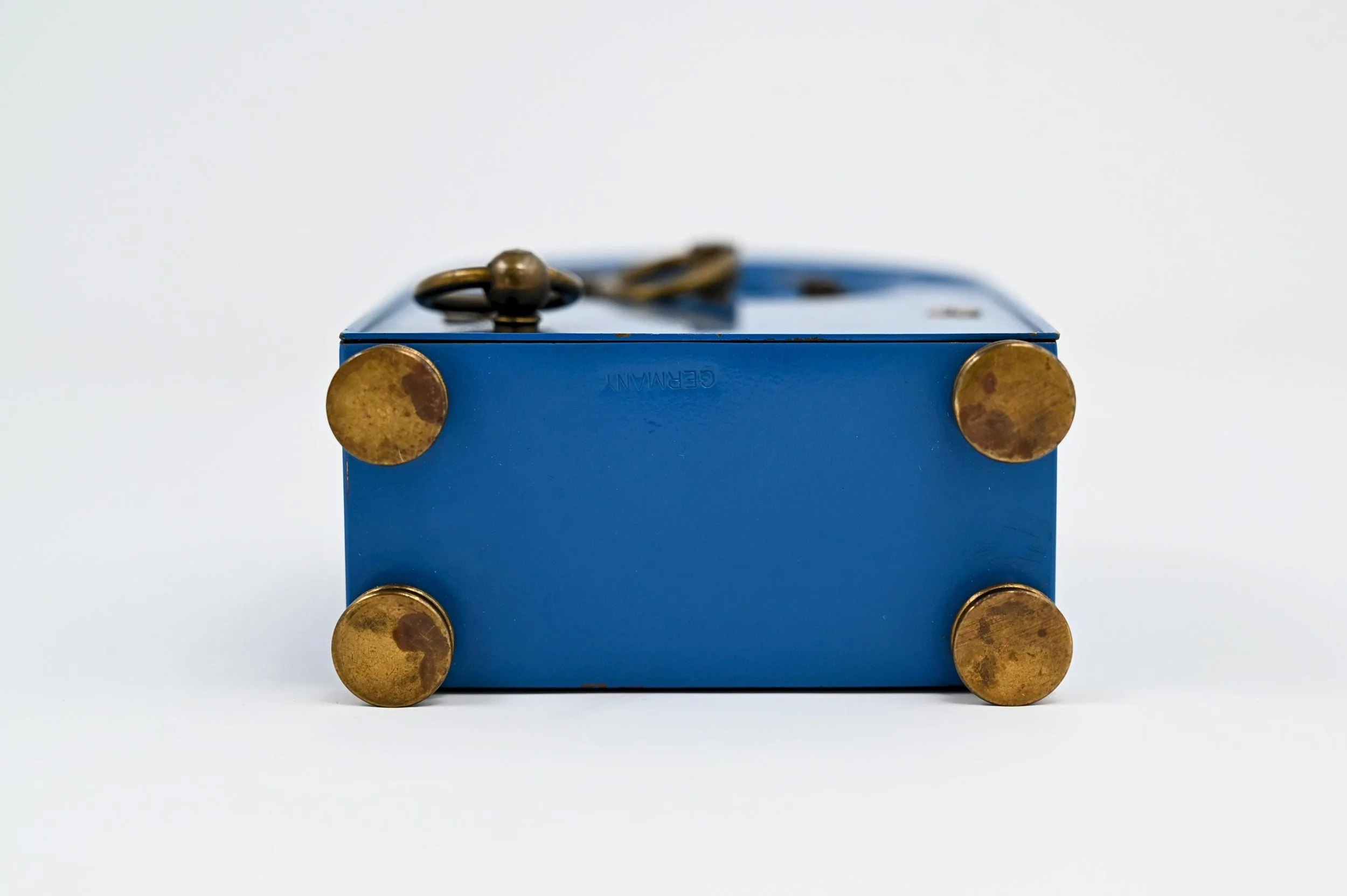 Image 10 of 14
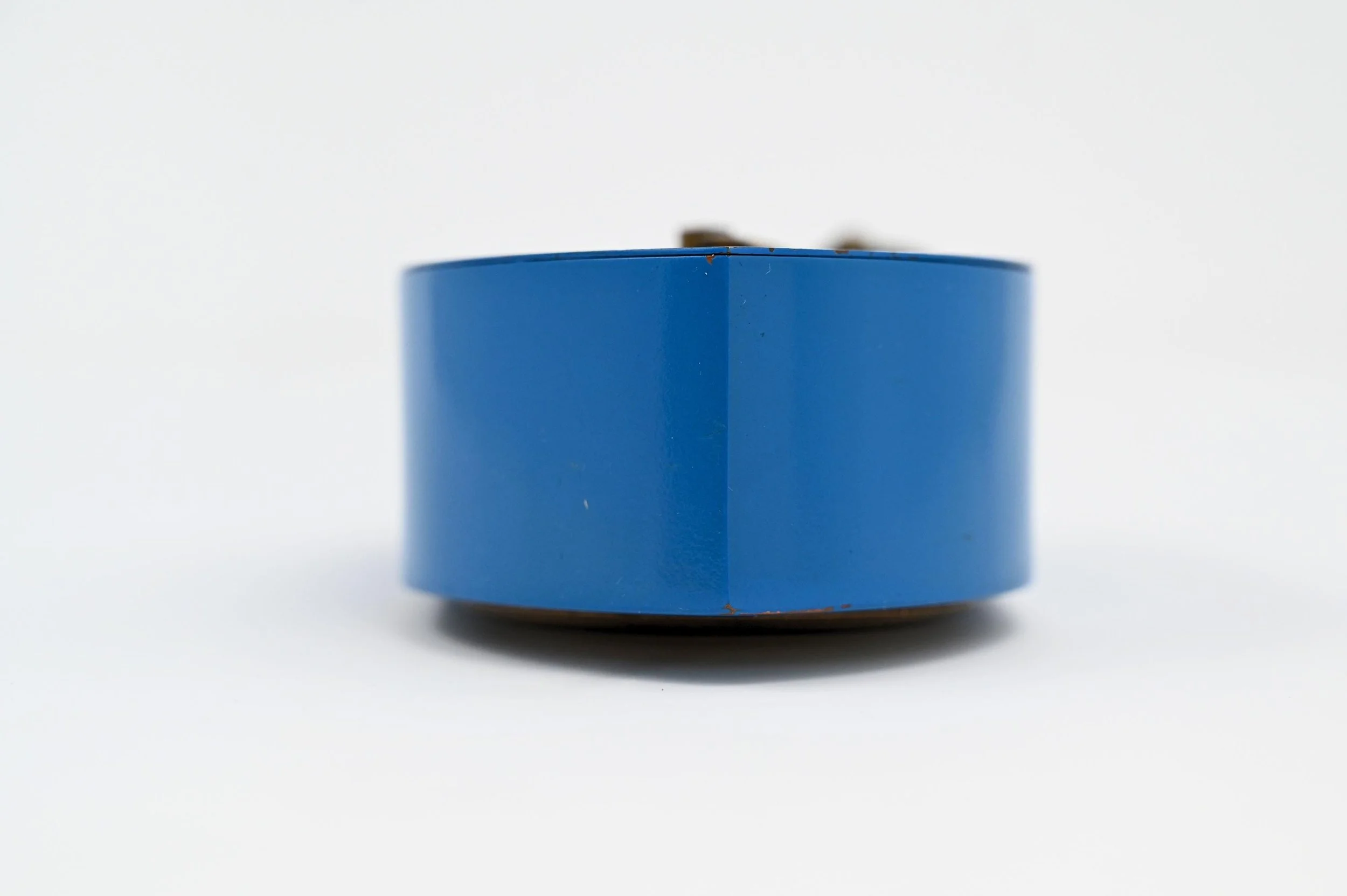 Image 11 of 14
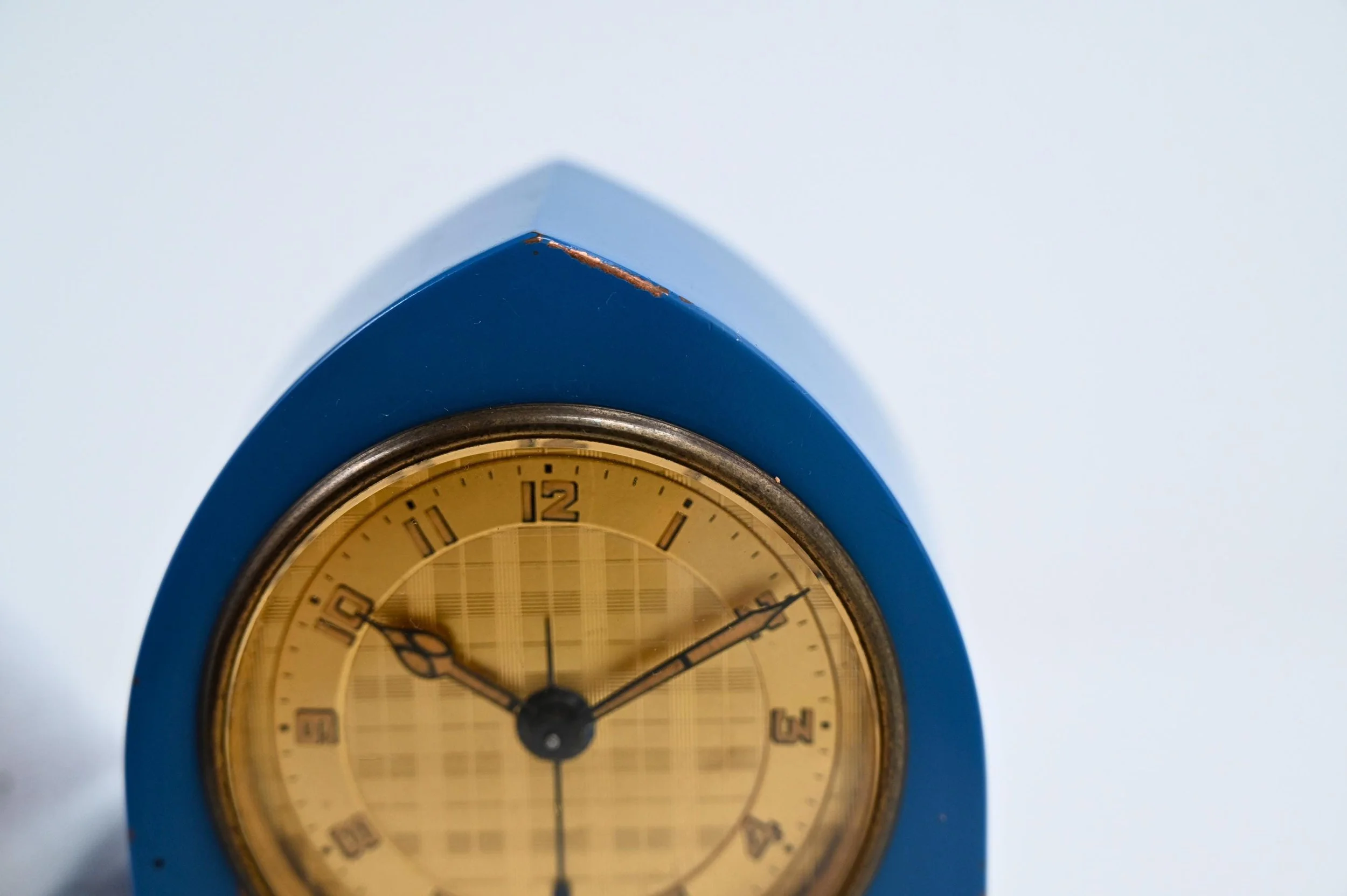 Image 12 of 14
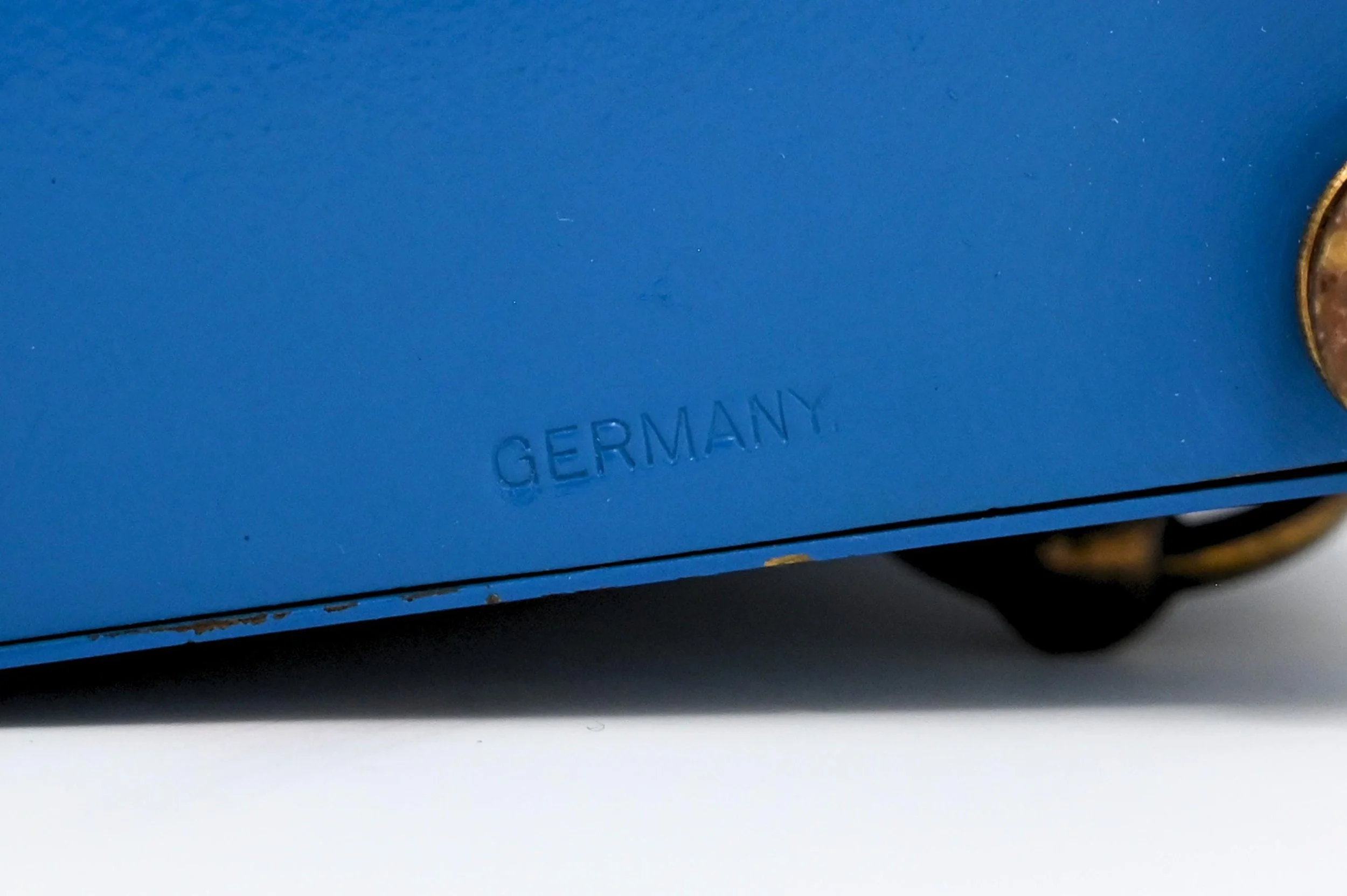 Image 13 of 14
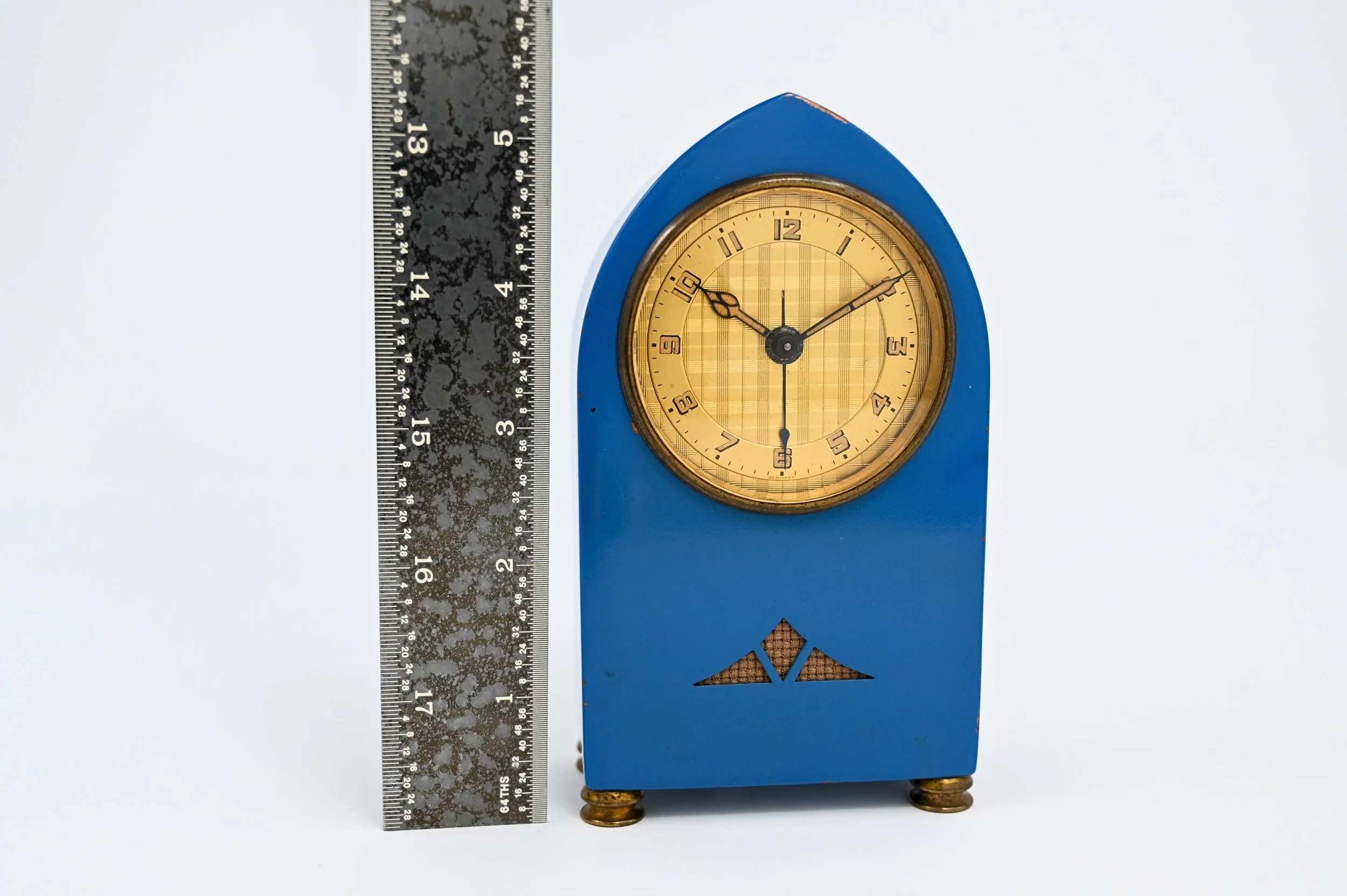 Image 14 of 14