Theodore B. Starr French Mantel Clock with Edwardian Inlay
A refined early-1900s Theodore B. Starr mantel clock featuring a French time-only movement, arched mahogany case, delicate Edwardian string inlay, brass bezel, and petite brass bun feet. Its clean Roman numeral dial and softly architectural silhouette give it that quiet old-money look that feels right at home on a bookshelf, mantel, or study desk.
Sold through Theodore B. Starr, one of New York’s notable luxury jewelers of the Gilded Age and early Edwardian period, this piece reflects the era when elite American retailers imported fine French clockworks and paired them with elegant, understated cases. The slender inlaid border framing the front panel is a classic Edwardian design touch, adding just enough ornament without overwhelming the simplicity of the form. It is currently running, ticking, and keeping time, though it runs slightly slow and may benefit from minor regulation typical of antique mechanical clocks.
📚 Historical Context
Theodore B. Starr was a prominent New York jeweler and luxury retailer active during the late 19th and early 20th centuries, serving an upscale clientele during America’s Gilded Age and Edwardian era. Rather than manufacturing his own movements, Starr often retailed imported French clocks, which were prized for their quality and precision.
This example appears to date to the 1900s, when small architectural mantel clocks with mahogany cases, satinwood-style line inlay, and restrained decorative detailing were especially popular in well-appointed parlors, studies, and private libraries. Its French movement, retailer-signed dial, and crisp Edwardian inlaid casework place it firmly in that moment when luxury interiors favored refinement, symmetry, and subtle ornament over heavier Victorian excess.
✨ Condition Notes
- Clock is currently running and ticking.
- Keeps time, but runs slightly slow and may benefit from minor regulation.
- Original dial has a faint hairline, visible on close inspection but not overly distracting in normal display.
- Mahogany case shows light surface wear, small scratches, and age-consistent finish variation.
- Front inlay remains intact and presents well, with the slim Edwardian border still giving the case a crisp, elegant outline.
- Brass bezel, back cover, and feet show age-appropriate patina.
Includes winding key.
- French movement stamped Made in France.
- This is a true antique mechanical clock and should be handled with the normal care expected for pieces of this age.
📏 Measurements (approximate)
Height: 6.875 in
Width: 4.875 in
Depth: 2.75 in
📦 Packaging
Clock will be professionally padded and boxed with care.
A refined early-1900s Theodore B. Starr mantel clock featuring a French time-only movement, arched mahogany case, delicate Edwardian string inlay, brass bezel, and petite brass bun feet. Its clean Roman numeral dial and softly architectural silhouette give it that quiet old-money look that feels right at home on a bookshelf, mantel, or study desk.
Sold through Theodore B. Starr, one of New York’s notable luxury jewelers of the Gilded Age and early Edwardian period, this piece reflects the era when elite American retailers imported fine French clockworks and paired them with elegant, understated cases. The slender inlaid border framing the front panel is a classic Edwardian design touch, adding just enough ornament without overwhelming the simplicity of the form. It is currently running, ticking, and keeping time, though it runs slightly slow and may benefit from minor regulation typical of antique mechanical clocks.
📚 Historical Context
Theodore B. Starr was a prominent New York jeweler and luxury retailer active during the late 19th and early 20th centuries, serving an upscale clientele during America’s Gilded Age and Edwardian era. Rather than manufacturing his own movements, Starr often retailed imported French clocks, which were prized for their quality and precision.
This example appears to date to the 1900s, when small architectural mantel clocks with mahogany cases, satinwood-style line inlay, and restrained decorative detailing were especially popular in well-appointed parlors, studies, and private libraries. Its French movement, retailer-signed dial, and crisp Edwardian inlaid casework place it firmly in that moment when luxury interiors favored refinement, symmetry, and subtle ornament over heavier Victorian excess.
✨ Condition Notes
- Clock is currently running and ticking.
- Keeps time, but runs slightly slow and may benefit from minor regulation.
- Original dial has a faint hairline, visible on close inspection but not overly distracting in normal display.
- Mahogany case shows light surface wear, small scratches, and age-consistent finish variation.
- Front inlay remains intact and presents well, with the slim Edwardian border still giving the case a crisp, elegant outline.
- Brass bezel, back cover, and feet show age-appropriate patina.
Includes winding key.
- French movement stamped Made in France.
- This is a true antique mechanical clock and should be handled with the normal care expected for pieces of this age.
📏 Measurements (approximate)
Height: 6.875 in
Width: 4.875 in
Depth: 2.75 in
📦 Packaging
Clock will be professionally padded and boxed with care.
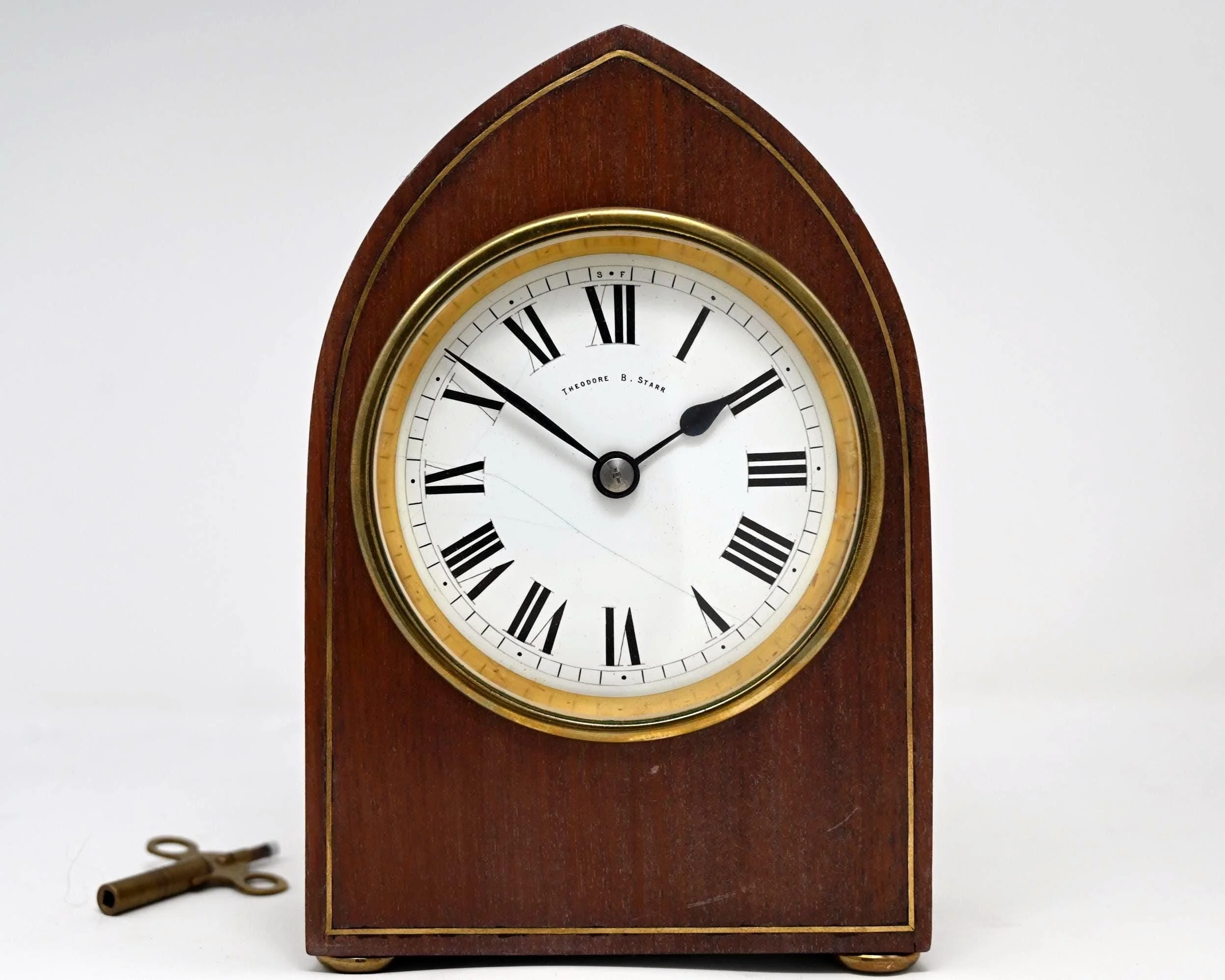 Image 1 of 16
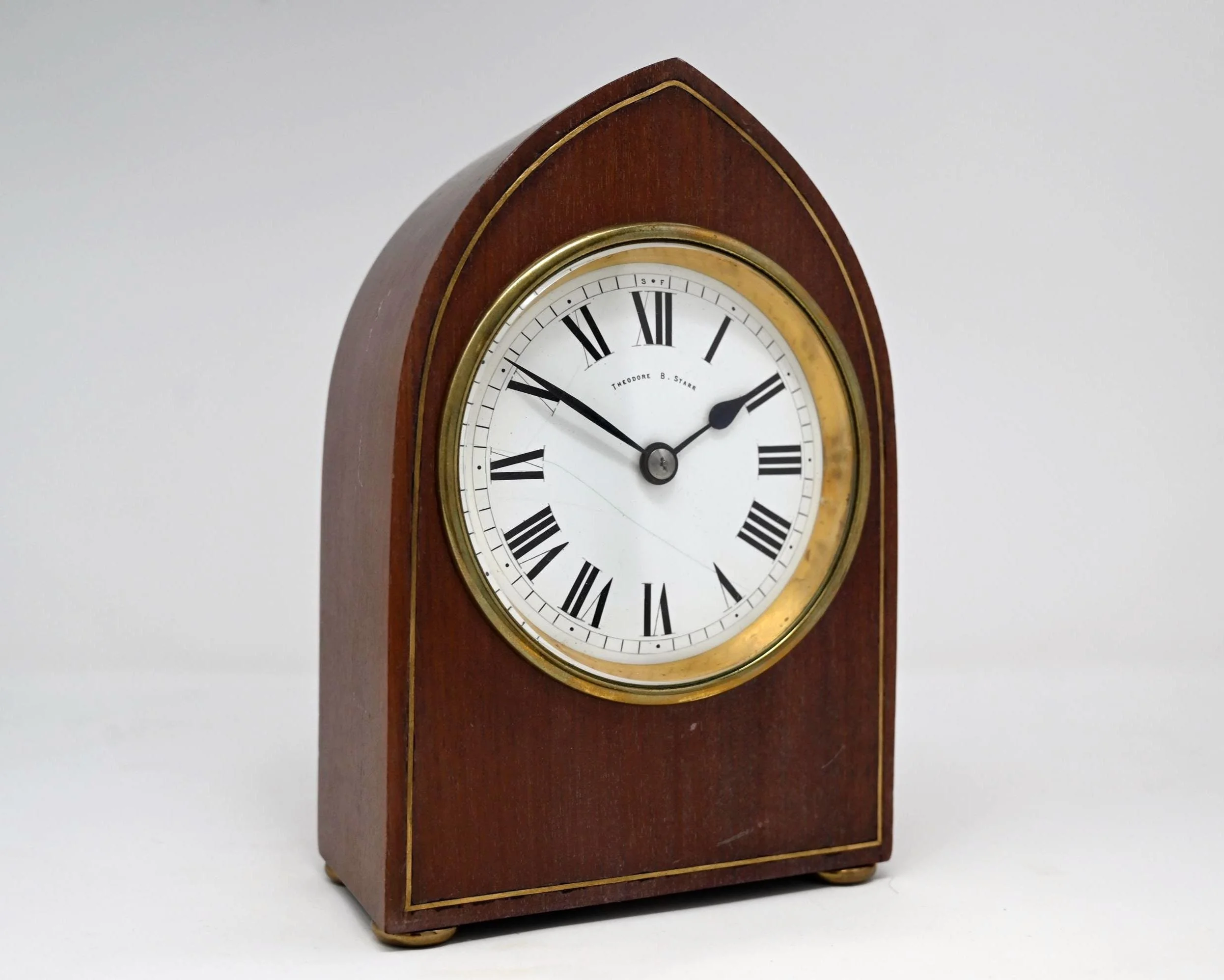 Image 2 of 16
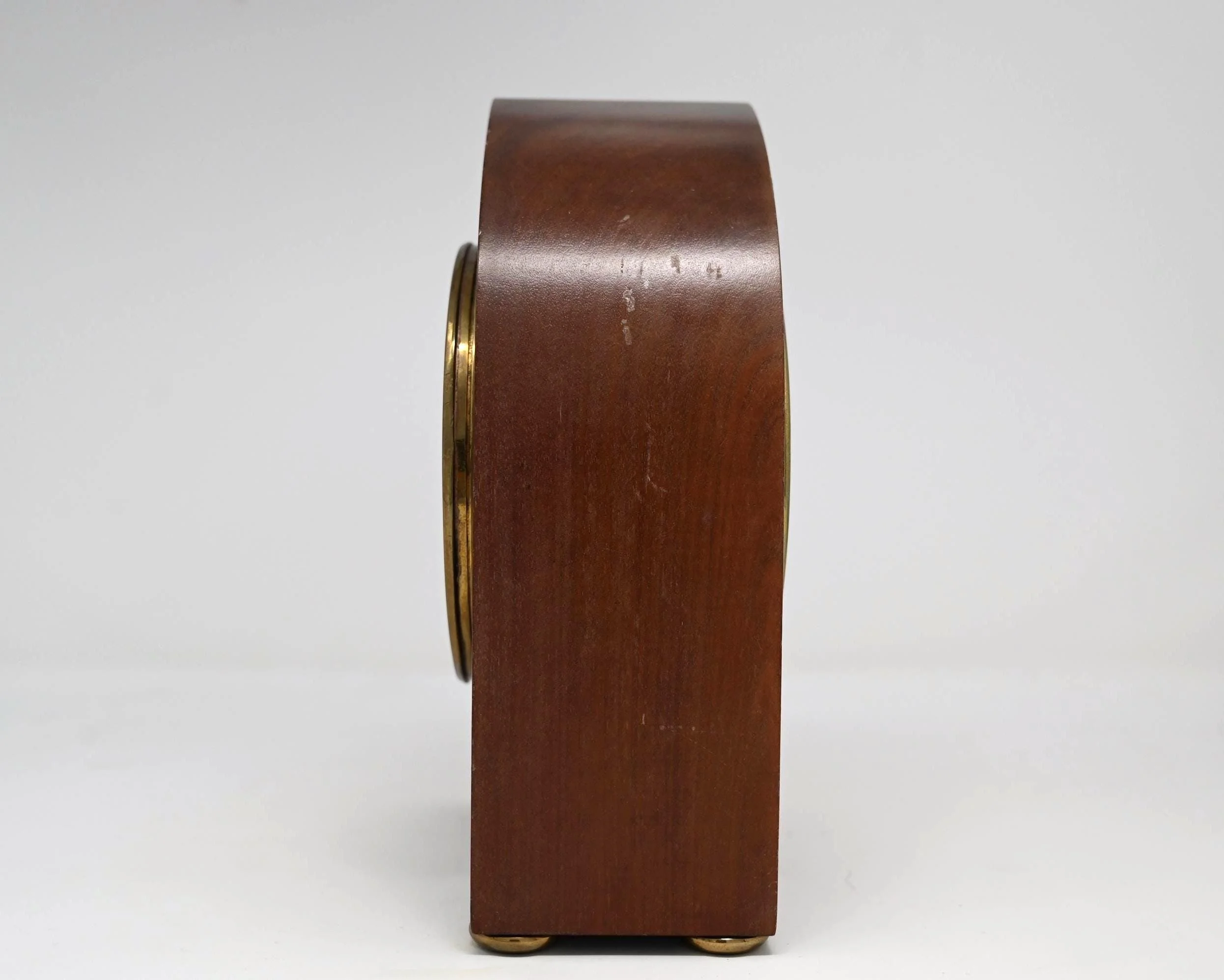 Image 3 of 16
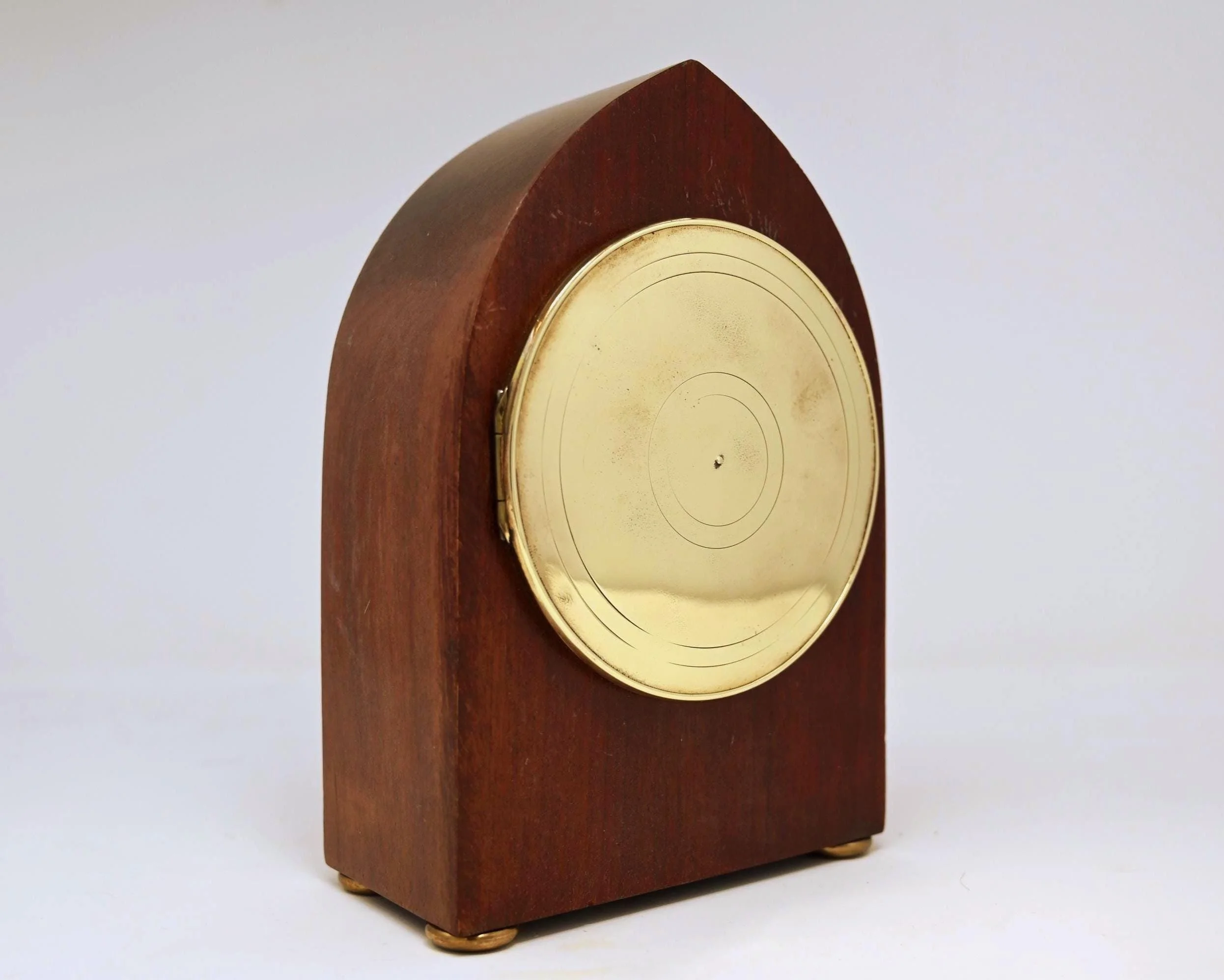 Image 4 of 16
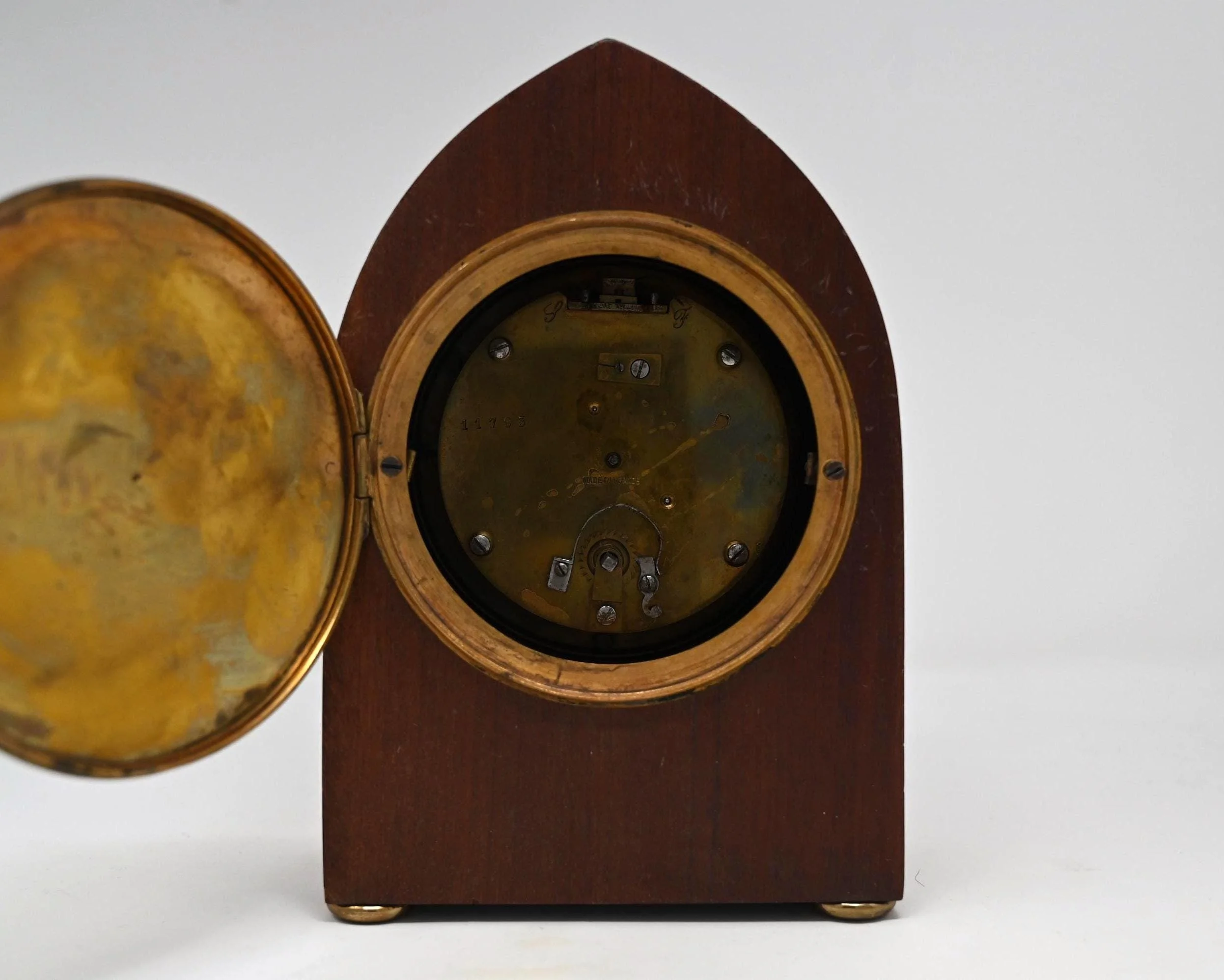 Image 5 of 16
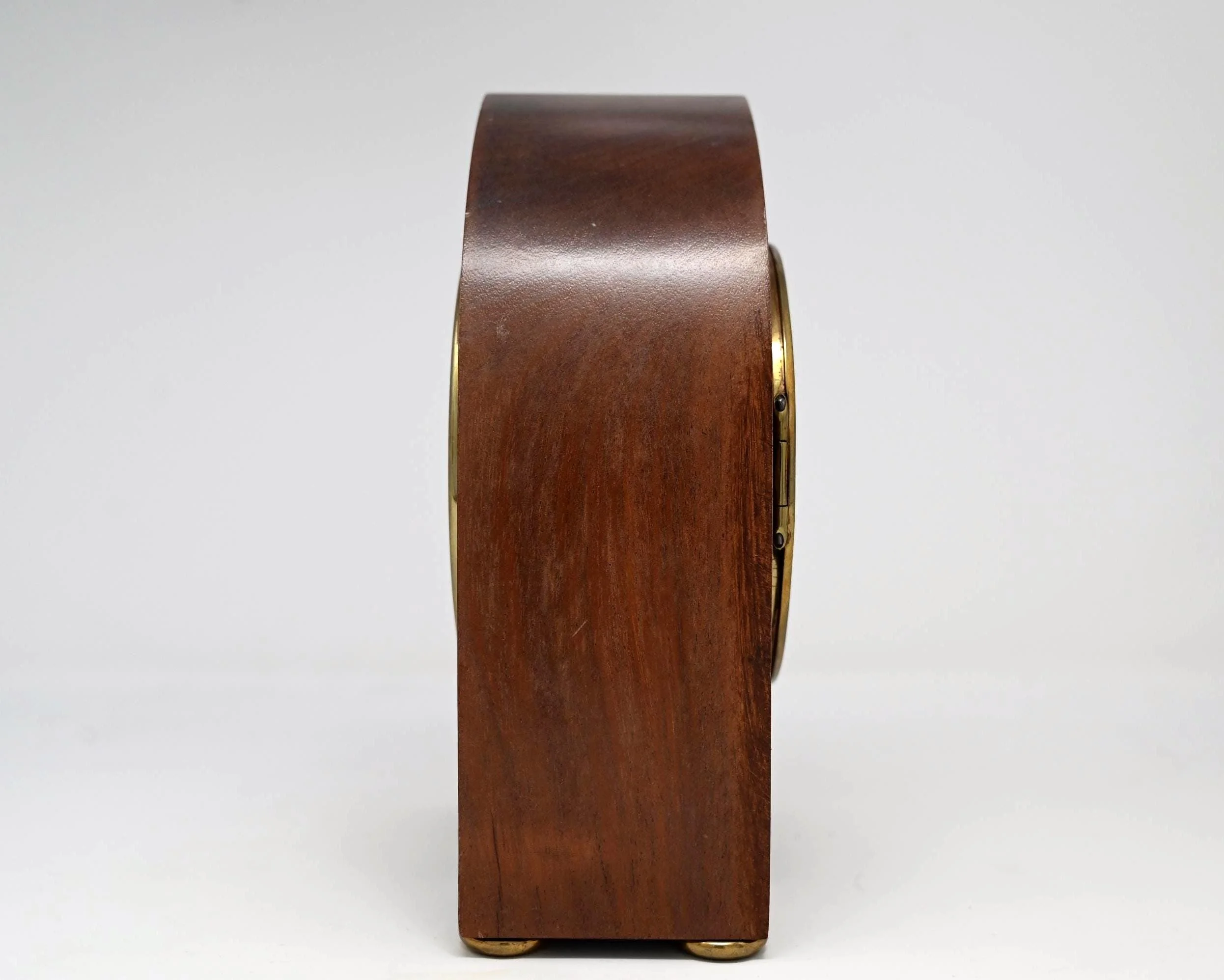 Image 6 of 16
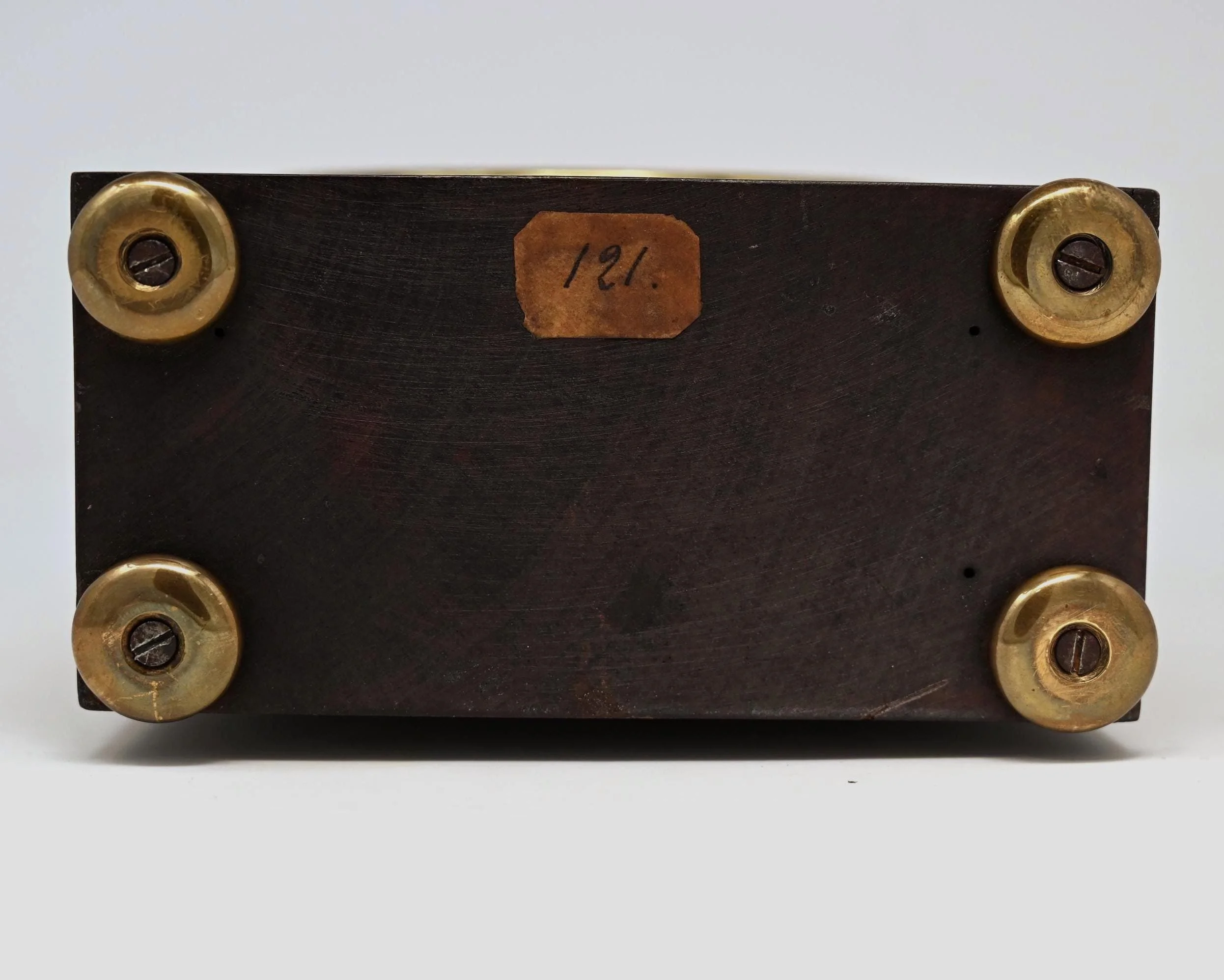 Image 7 of 16
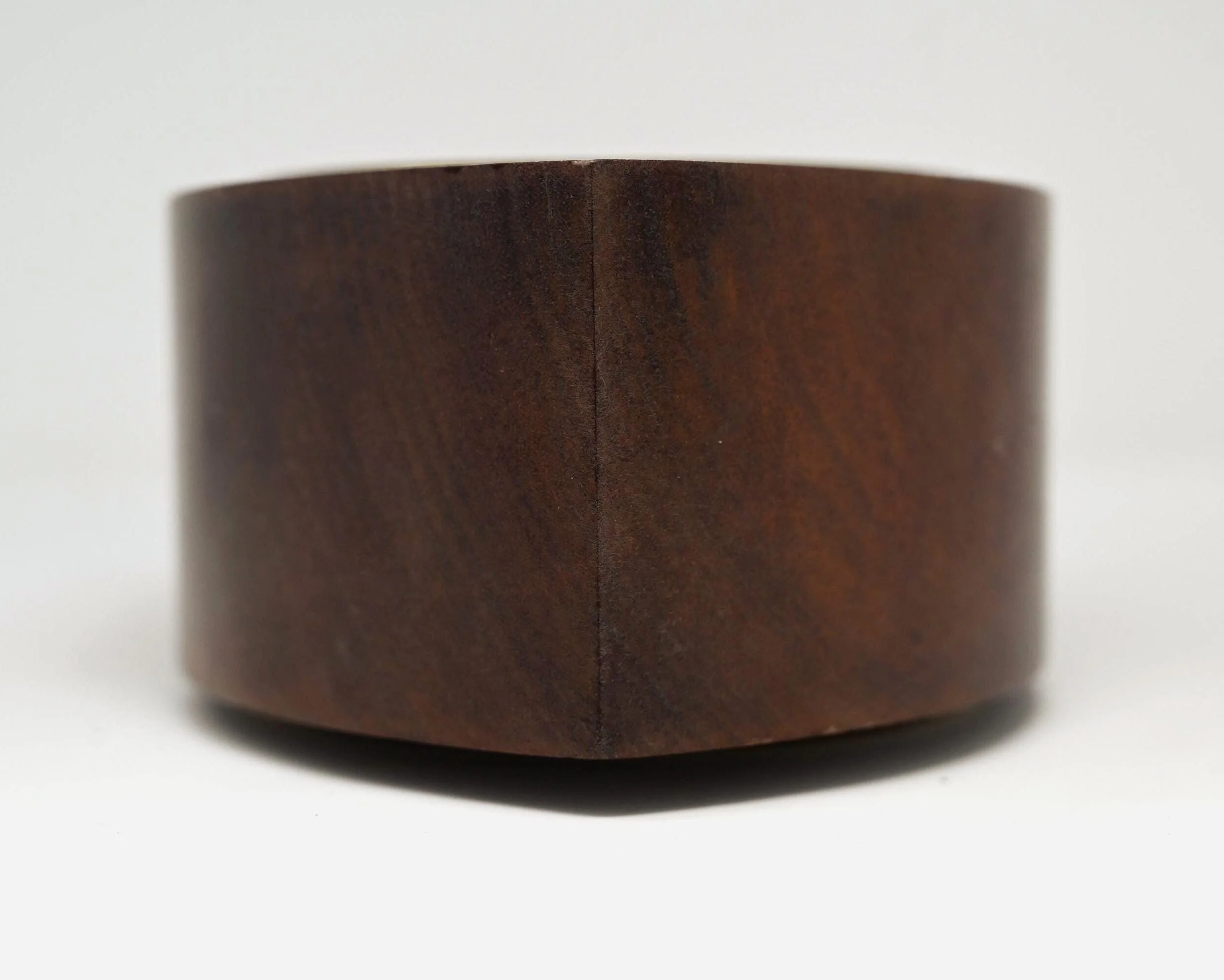 Image 8 of 16
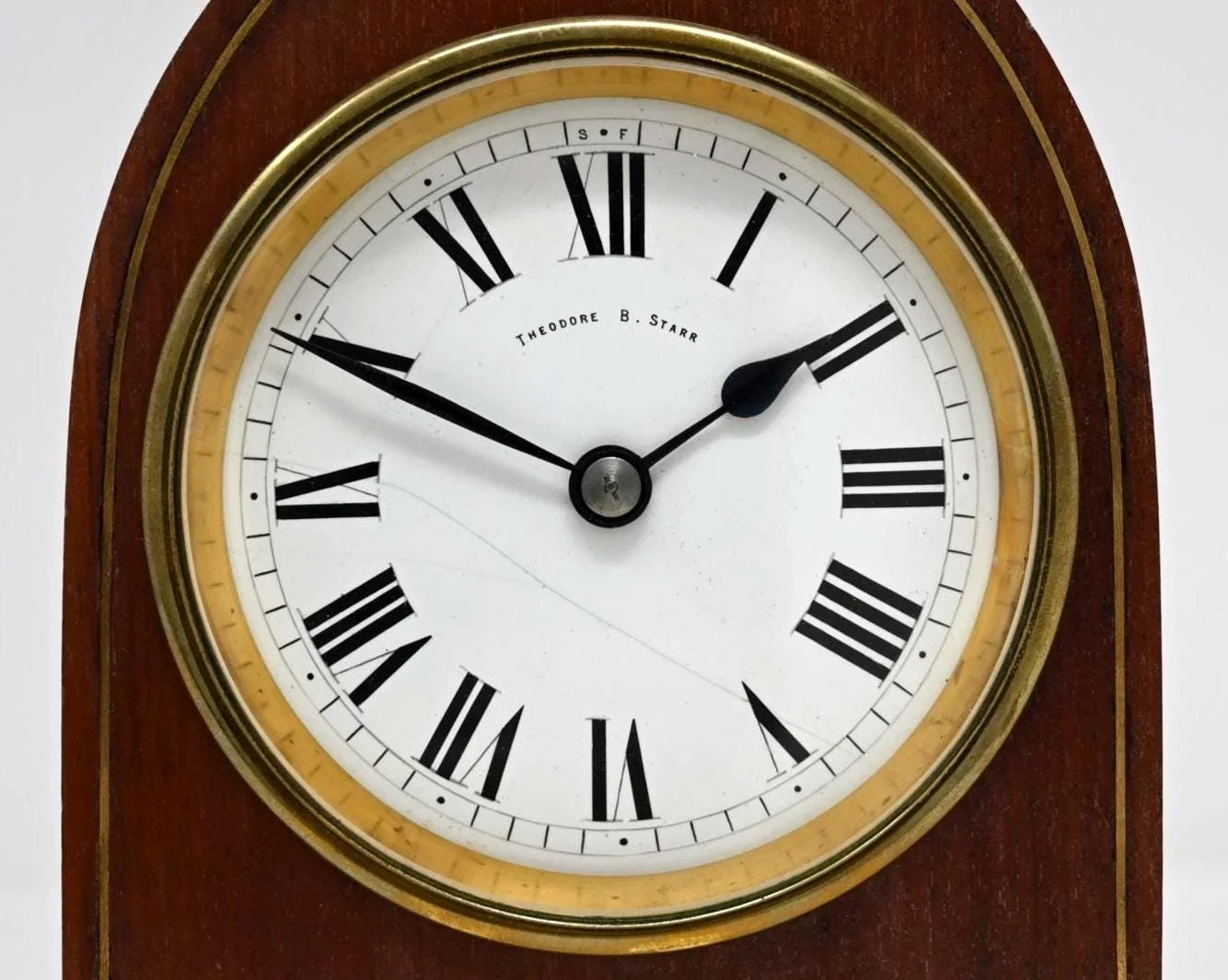 Image 9 of 16
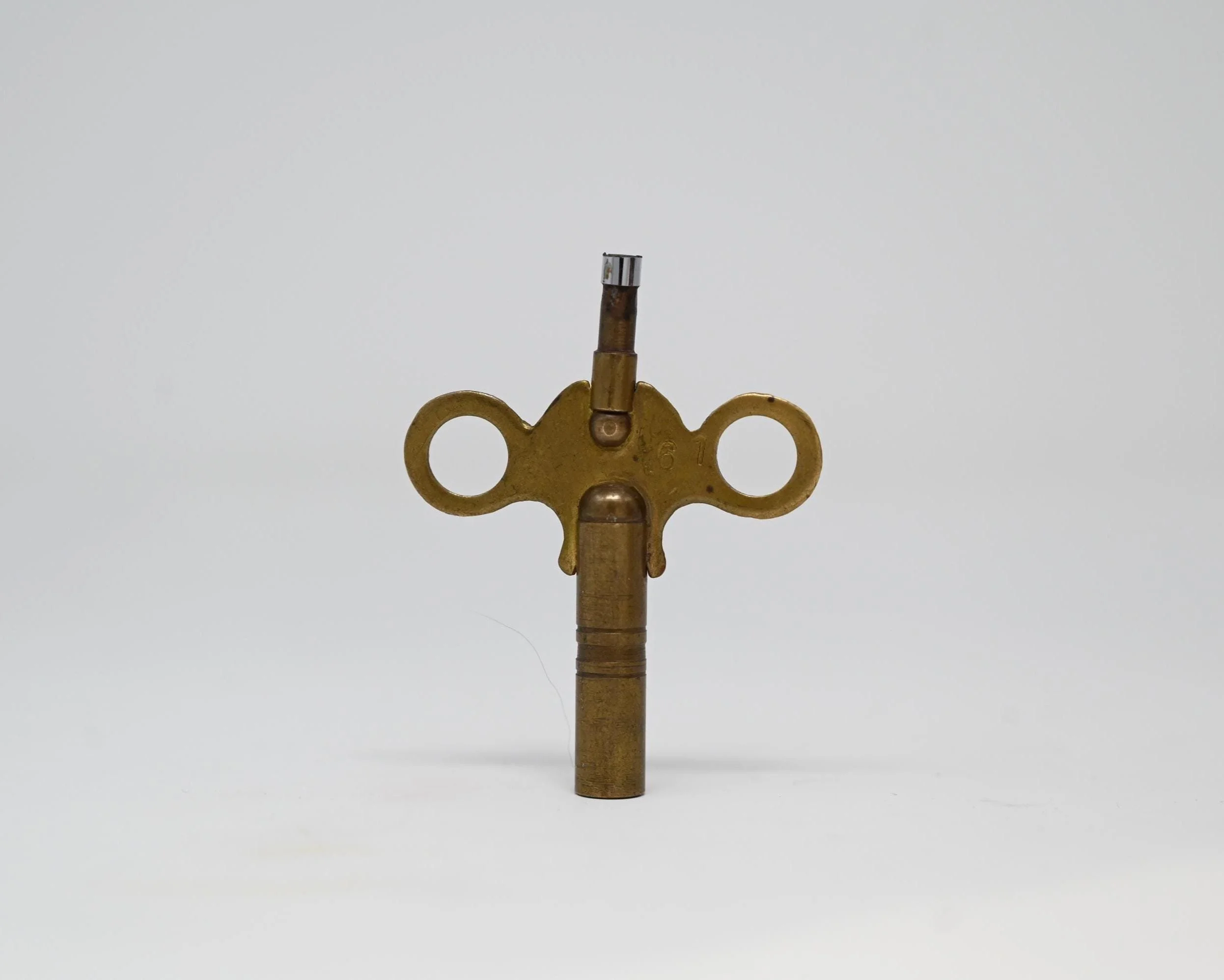 Image 10 of 16
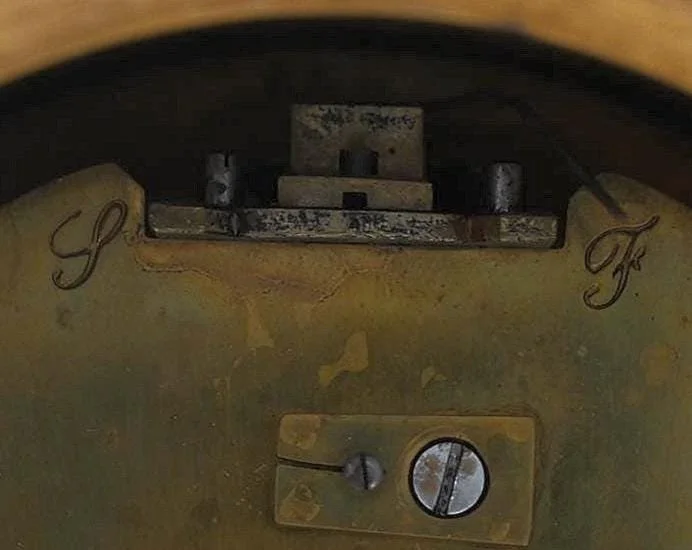 Image 11 of 16
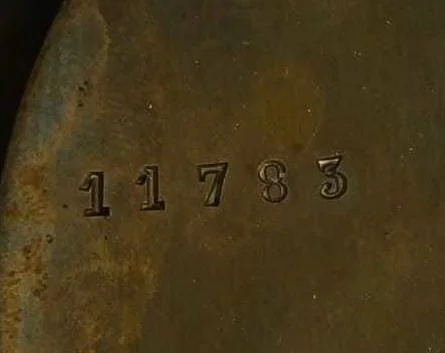 Image 12 of 16
 Image 13 of 16
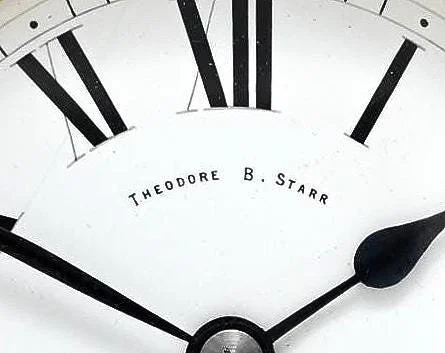 Image 14 of 16
 Image 15 of 16
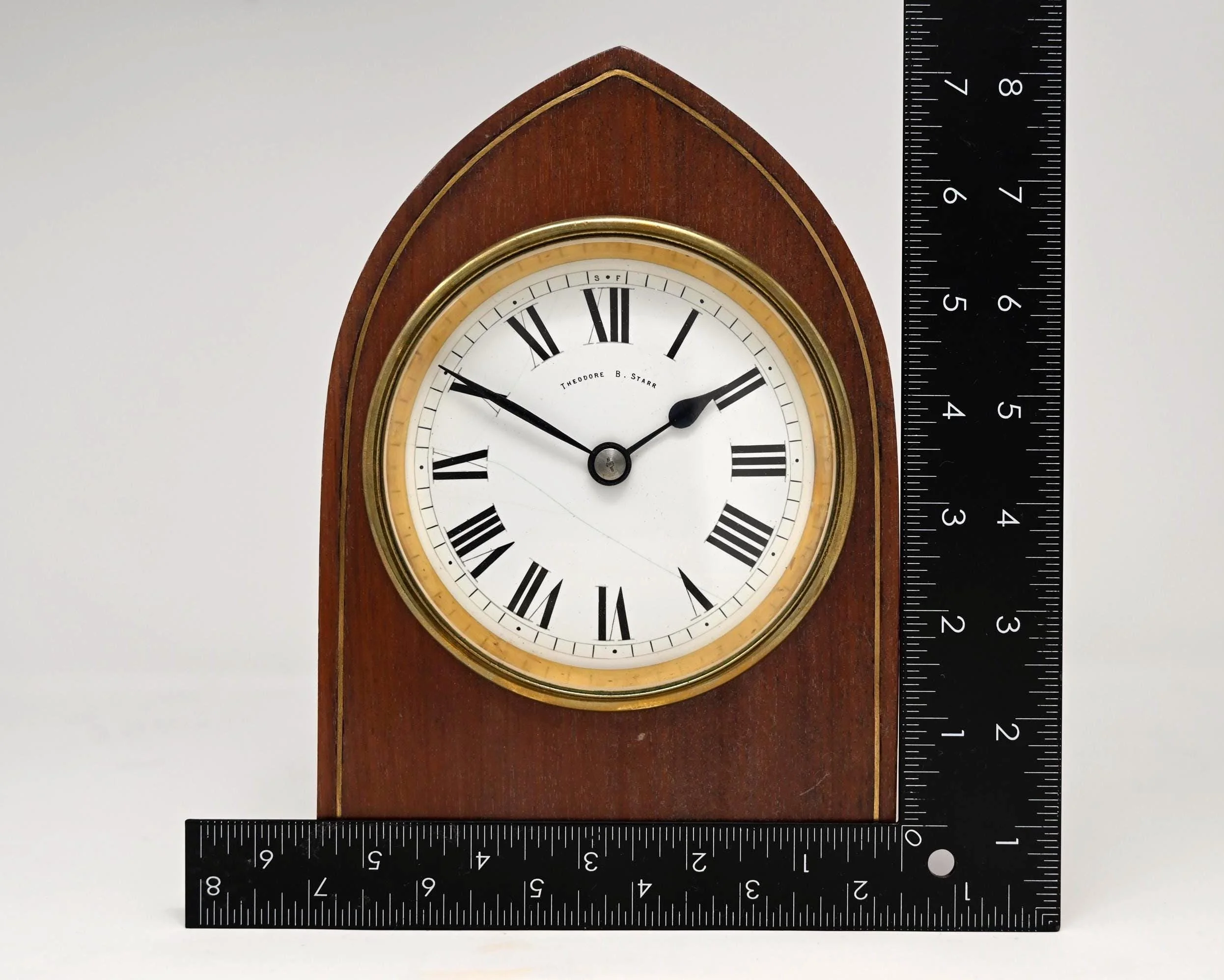 Image 16 of 16